

This Sunday, we’re running our monthly online peer support group for post-psychedelic difficulties. Get in touch if you’d like to come.
I have never felt so popular as an author. These days, multiple times a week, I receive emails from successful authors effusively praising my work, I get invites to festivals and book clubs all over the world, I get emails from agents and publishing houses demanding the rights to my next book.
Unfortunately, yes you guessed it, it’s all a wave of fake AI slop trying to scam me.
Last week, it was an email from a successful British author called Beth O’Leary:
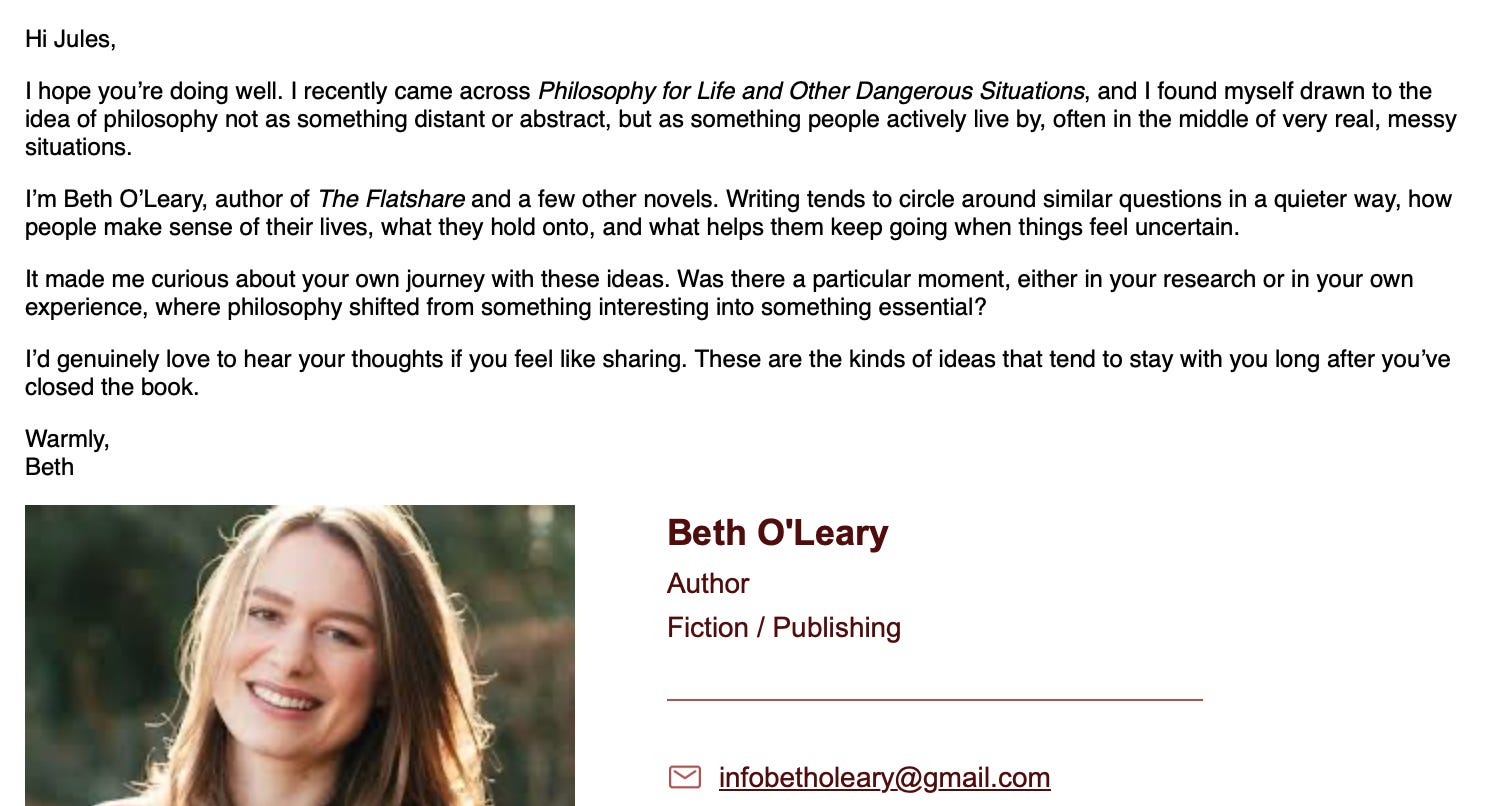
Beth is a real person, but the email felt a bit like AI - all too smooth and glib - so I messaged the author on Instagram and asked her. Yep, fake.
Then a few days later, another email from another successful author, effusing over my last book, Holiday from the Self. Also fake. Then there’s emails from festival organizers - this one had the right name for the festival organizer, and an AI’s glib knowledge of my book, but the message is a scam inviting me to do an interview which I’m guessing would be pay-to-play.

I’ve received five AI-generated scammer emails targeting me in the last week, all because I classify as a desperate person susceptible to flattery - ie, a writer.
Last month, Colleen Hoover, one of the most successful authors in the world, posted this on Facebook:
Someone sent me their manuscript today. They attached their entire book that they spent a year writing, only I noticed they also sent it to another email with my name at the same time, but a slightly different version of my email addy. They did this because the email they had been talking to “me” through was different than my website email, so they wanted to send it to both of my emails to make sure I received it. Any minute now, that manuscript is probably going to be uploaded under a fake name and put out into the world for sale. This author spent a year writing this book and now they’ve shared it with a scammer and there’s nothing I can do for them. There’s nothing they can do to prevent it. Please, please, please be very suspicious. I don’t randomly email people I don’t know. I can hardly even respond to emails from people I know. I don’t even really check my email now BECAUSE of the number of fake emails I have to sift through now.
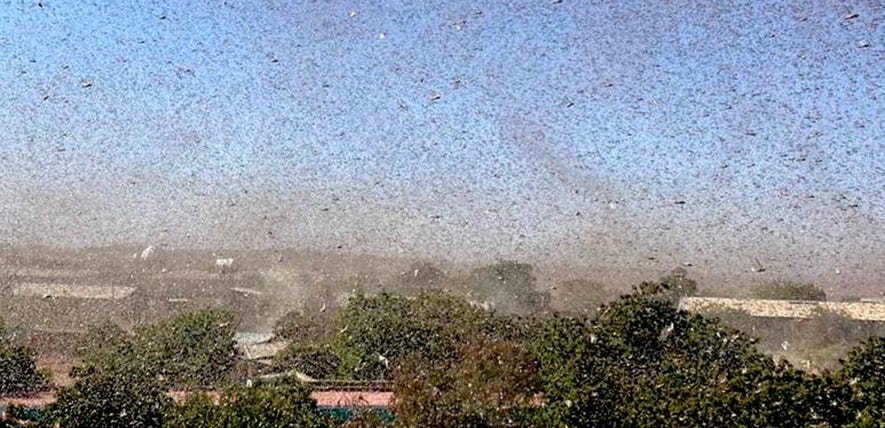
This is just in my little corner of the economy, the publishing world. But I imagine the locust cloud of AI scams is swarming across every part of the global economy. And it leads to an ontological destabilization straight out of Philip K. Dick - you can’t be sure if the people you’re interacting with online are real people or AIs programmed to build intimacy and then scam you. Every email or new invite on social media, I now wonder…are you real?
The scam economy, of course, is nothing new, but recently it’s been growing. One in four adults lost money to scams last year, according to the Global Anti-Scam Alliance NGO. Over $1 trillion is lost to online fraud each year. A lot of the scamming takes place in outlaw states Cambodia and Myanmar, in scam compounds in which an estimated 200,000 people are enslaved and forced to work on something called ‘pig-butchering’. The slaves are forced to create an online persona, find a lonely person on gaming, social media or dating apps, build rapport (this is known as ‘fattening the pig’), then after a few weeks or months, they start asking them for money, then take them for everything they can get. If the slaves refuse to do this, they are tortured, raped or murdered - it’s beyond the worst nightmares of George Orwell.
And these slave-run, misery-exporting scam compounds account for half the GDP of Cambodia.
Hellish.
Well, the good news is these international scam gangs won’t need to enslave hundreds of thousands of people to do pig-butchering for them soon - they’ll have AI bots to do it for them. The bad news is, these AI bots will be far, far better at it than humans.
After the paywall, three psychedelic start-ups get vouchers from the FDA, including one I didn’t expect; some fantastic new books I’m reading; great new mini-doc on psychedelics; prediction markets foster insider dealing (including among the Special Forces); Elon Musk accused in lawsuit of being on ‘rhino ketamine’ when he negotiated with OpenAI; and what makes people think AI is conscious?
