


Welcome to Tuesday Brunch, our round-up of interesting EI-related news. I’m switching the Brunch to a bigger fortnightly offering. This Sunday, by the way, we have another peer support group for post-psychedelic difficulties - message me if you’d like to attend.
Yesterday, the Pope issued his much-anticipated AI encyclical, ‘Magnifica Humanitas’, in a presentation at the Vatican alongside Anthropic co-founder Chris Olah.
(Imagine if, in 200 years, Anthropic has replaced the Vatican…)
Pope Leo XIV suggested the AI era could turn into control of the unemployed masses by a handful of power-obsessed tech oligarchs. He contrasted an ‘age of power’ with a ‘civilization of love’, a new Babel with a New Jerusalem, tech transhumanism (ie an obsession with self-optimization and immortality through biohacking) with Christian transhumanism, in which humans transcend finitude through a paradoxical, Christ-like acceptance of the human condition and ego-death to the Divine in our souls, not our hard-drives.
What was strangely missing from the encyclical was a warning about idolatry - the risk of turning AI into The Oracle, whose advice you follow without question regarding every aspect of your life. The Pope also avoided the whole question of AI consciousness, and whether it’s possible that humans could engineer a conscious being in the way that humans are conscious. This is the fundamental theological question of our time, so it’s odd His Holiness had nothing to say about it in his AI encyclical.

On a side note, it was interesting to see some psychedelic folk at the Encyclical presentation, including MAPS board member Liana Sananda Gillooly. She’s working for Tristan Harris’s Center for Humane Technology, helping them raise funding I guess. Imran Khan, formerly head of UC Berkeley’s psychedelic team, is also now working at CHT. The shift from psychedelics to AI makes sense, especially for NGO people - there is so much money coming from AI (especially Anthropic) into philanthropy.
Over at Google, meanwhile, Demis Hassabis, the British founder of Google DeepMind, told the audience of Google’s annual I/O event:
AGI is now on the horizon, and it will be the most profound and impactful technology ever invented. If built right, it could propel human flourishing beyond our imagining… When we look back at this time, I think we will realize we were standing in the foothills of the Singularity. This will improve the lives of everyone everywhere.
The Singularity: a term first used by science fiction writer Vernor Vinge in the 1980s and by many transhumanists and tech utopians ever since, to mean an ‘intelligence explosion’ (an idea introduced in the 1960s by IJ Good) that comes about suddenly, when intelligent machines become capable of self-programming. Within a few months, machine intelligence grows exponentially to reach God-like Super-Intelligence, and then either solves all human problems or accidentally / intentionally eliminates humanity.
I admire Hassabis. He seems to have integrity and does not have the obvious personality flaws of some other tech overlords. Still, he has an exceptionally rosy vision of the future - has any new technology ever improved the lives of everyone everywhere?
While Demis Hassabis is bigging AGI up as the greatest technological invention ever, the public reaction to AI is much darker than the excitement that greeted Steve Jobs’ announcement of the iPhone 20 years ago. In fact, when the former CEO of Google mentioned AI in a commencement speech last week, he got booed! Sam Altman’s house got Molotov cocktailed!
The reasons for this stark shift in sentiment towards tech are various. First, the idea that tech founders as groovy altruistic visionaries is long gone, it died the moment the richest man in the world gleefully destroyed USAID. They’re now generally seen as unfathomably-rich lords of the universe who are dissociated from ordinary life and will do anything to preserve their extreme wealth and power.
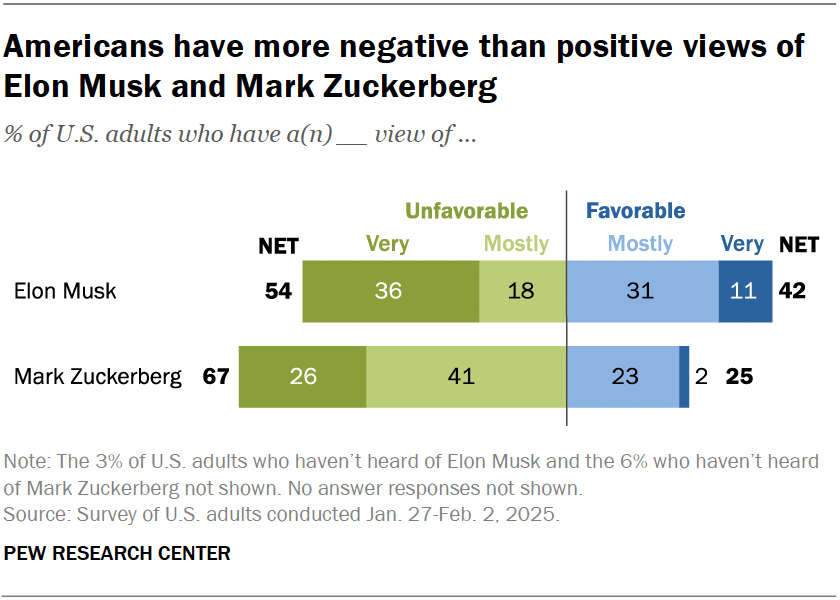
Second, we now realize that the utopian promise of the internet was a lie, and being online all the time has screwed us up - that’s why 1,200 school districts are suing Meta for harms from digital addiction.
The psychological harms from the internet / social media are apparently so great to young people, they threaten the UK economy. A new government report suggests the UK faces an ‘economic catastrophe’ because so many young people are anxious, unemployable and sitting in their bedroom addicted to their phones. One million British 16-24-year-olds are ‘NEETs’ (Not in Education, Employment or Training), according to the report from former minister Alan Millburn. He said:
This is a bedroom generation. They are sort of living in their bedrooms. They are on [their smartphones] all the time, they’re never off. [Social media] is leading to some evidence of functional impairment, changing their sleep patterns, concentration levels. That is having an impact on their ability to work…They have grown up in a digital world that has rewired how they communicate, form relationships and manage stress. They have fewer experiences of workplaces, and they present with higher levels of anxiety and depression.
Tech utopianism is by this stage a failed religion. And yet…I wonder if, just as we were excessively optimistic about tech 20 years ago, are we excessively pessimistic now? What if we really are in the foothills of the Singularity?

After the paywall, was the Enhanced Games one big flaccid erection? Plus, calls for the UK to ban kambo; a new John Lilly documentary; is MAHA anti-psychiatry; and some great new papers on psychedelic harm reduction.
