

The public debate about the future of psychedelics is also a debate about the past. What happened in the 1960s, why did psychedelics get banned? The renaissance has been built on a rather trite yet endlessly repeated version of history, told by the leading figures of the Renaissance – nothing really went wrong, in fact, the drugs worked! They made people more pacifist and less racist, and this freaked out the evil authorities, so they drummed up propaganda about bad trips and people jumping out of windows, and banned the drugs.
That story about the past might not be totally wrong, but it leaves a lot out. I’ve been looking at one other thread of history – the epidemic of teenage runaways in the 1960s, and how this was mixed up with psychedelic panic in public discourse. Hundreds of thousands of teenagers ran away from home in the late 1960s, and a lot of them ended up in California, some living on the streets in Haight-Ashbury. Some found a second home in hippy culture, but some of them lost their minds and were preyed upon by rapists. I am curious if parents’ concerns about what was happening to teenagers in the 1960s, and the fear of losing their kids, was one of the main drivers of the federal crackdown on psychedelics.
I’ll explore this topic deeper in a future newsletter, but for this Tuesday Brunch, I want to point your attention to an interesting historical artefact – the 1967 CBS Special, ‘The Hippie Temptation’. This was a prime-time documentary on the dangers of psychedelics, of the sort that’s been glaringly absent from the last 20 years of media coverage, but that we’re now beginning to see about ketamine, in the UK at least.
‘The Hippie Temptation’ is clearly intended to raise moral alarm about the risks of psychedelics, but it’s not totally biased propaganda. It features interviews with the Grateful Dead, with some ecstatic hippies, and also with Dr David Smith, the founder of the free medical clinic in Haight and arguably the pioneer of psychedelic harm reduction. It also has some startling footage of people hospitalized for bad trips and severe post-psychedelic difficulties, including suicide attempts.
The reporter takes the viewer on a sort of safari of Haight-Ashbury, including a street rave with what sounds very like early SF techno (44 mins in). He warns that the entire culture is based on LSD:
The drug is what holds their subculture together and the drug is extremely dangerous. For every user there is the danger of a bad trip on the drug where sensory distortion becomes terrifying and the acid head may leap from a window or run wildly through traffic . There is a steady flow into San Francisco hospitals of young people who have freaked out and been picked up by the police in a state of desperate terror.
At this point we see footage of an unfortunate hippy chick being checked in to a hospital by a couple of cops, as she plaintively asks where she is and who she is.
The footage then cuts to the UCLA Neuropsychiatric Institute’s Dr J. Thomas Ungerleider, who says:
We’re learning that it’s a very dangerous drug and it’s a very unpredictable drug. We’re learning that people can have a bad experience which they call a freak trip or freak out or bummer the first time they use the drug or they can have it after 150 previous good experiences. We’re learning that there’s no way to screen out the adverse reactors - not psychiatric interviews ,not psychological testing, not a history of absence of symptoms or job stability , nothing guarantees immunity from the bad trip. People come in often with frightening auditory and visual hallucinations, they hear and see things that are frightening, they come in with anxiety to the point of panic , they come in with depression, with suicidal thoughts, suicide attempts, some severe, and they come in with confusion, they wander about not knowing where they are. And the difficulty with it is we can’t predict it. Another thing that we’re seeing is the flashback phenomenon, the reoccurrences up to 18 months now. After you take the drug once you can have the acute symptoms return in their original intensity either in a situation of stress or in a no-stress situation, months or even a year later.
Now, admit it, you immediately thought, ‘this J. Thomas Ungerleider sounds like a real square, I bet he’s a born-again Christian or a Big Pharma stooge’ . I looked him up. In fact, he was a pioneering cannabis researcher who discovered its positive effect on glaucoma and was one of the first to argue for cannabis decriminalization. But he was also an early voice of warning regarding psychedelics, publishing an article on adverse events in 1966.
He also appeared in a couple of public health documentaries about LSD, one called LSD: Insight or Insanity, and another called Beyond LSD. The first one is pretty much a straight public health warning about LSD’s negative effects, but the second one is more nuanced. Ungerleider declares: ‘It’s such a fundamental hypocrisy when we adults tell the kids that our drugs – alcohol, barbiturates – are good drugs, while their marijuana and LSD are bad drugs.’ He concludes that we should keep discussing drugs in a calm, rational manner with our children. ‘LSD – Let’s Simmer Down’, he says, in a catchphrase destined not to catch on.
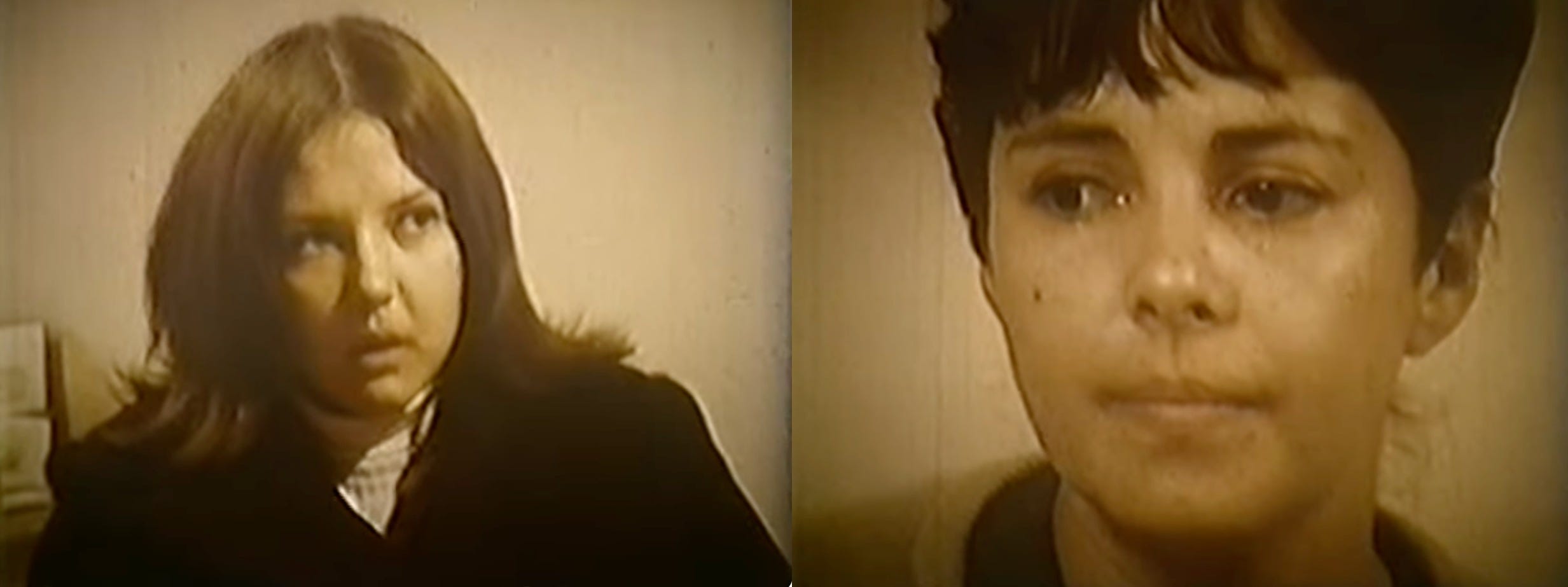
Anyway, back to the CBS documentary. The reporter goes to St Mary’s Hospital in San Francisco, and interviews two teenagers hospitalized there for severe post-psychedelic difficulties. He asks one teenage boy (19 minutes in) ‘why are you here?’
‘Well it’s a long story but I’ll try to break it down. in short, I found God and it made me feel quite good, and my mother mistook this good feeling for taking drugs. I was getting kind of wayward and everything, I wasn’t coming home in time so she called the police and I was brought here because of my talking about God and everything. They might have thought I was crazy.’
‘Do you think you are?’
‘No but I understand how they felt that, because I wasn’t making myself clear - it’s very hard because I was trying to express something that was hard to express and I wasn’t really capable of expressing it’.
His mother is interviewed: ‘I can’t describe to you the feeling that it gives you when your son says to you ‘can’t you feel God is everywhere, I’m going with God, I’m waiting for God to come’. it isn’t a happy thing at all, it’s a death wish - I tried talking sense to him. I said ‘Jimmy you don’t see God till you die’ but he couldn’t see that at all, he believed that he was seeing Him right now’.
You can watch the clip here
This sounds like a case of what we’d call Premature Ecstatification – the young kid has had a mystical experience without the maturity or vocabulary or social support to help him integrate it. I hope he made a full recovery and had a fulfilled life. Then the reporter interviews a teenage girl, hospitalised after she tried to commit suicide three times, after having taken LSD and ‘crystal’ (meth?) . Her mother says: ‘the light has gone out of her eyes, she’s not there, she’s like a zombie.’ That is not a nice thing for a parent to say. It turns out this teenage girl was raped when she was on LSD – she’s probably suffering from severe PTSD. I hope she recovered as well.
Dr J. Thomas Ungerleider of UCLA and Dr Dave Smith of the Haight Ashbury Free Clinic both suggest that LSD may have been blamed for amplifying something that already existed – a glaring generation gap between the baby-boomers and their WW2-veteran parents. The boomer kids (some of them at least) rejected materialism, rejected the rat-race, rejected parental authority and wanted to discover a new and more joyous way of living. And to the startled older generation, that looked like nihilism or madness. Many of them blamed LSD and marijuana for what had happened to their teenage kids, when it was only part of the story. There was also, clearly, a moral panic – the CBS doc features scientists suggesting LSD damages chromosomes. This turns out to have been nonsense .
However, it was the case that a lot of teenagers took psychedelics and got into trouble – either experiencing serious bad trips, or temporary psychosis, or running away from home and getting raped on the streets, or getting lost in coercive cults. This was not mere propaganda, much as the Renaissance likes to tell itself it was.
It’s hard to know what exactly went wrong and what went right in the 60s, from the perspective of sixty years later. The story is very different today, there’s no generation gap at play, no Vietnam War, no epidemic of runaways. But the adverse events are still occurring, and they’re still hard to predict.
After the paywall, did AOC spend campaign cash on ketamine? Plus, Texas ibogaine initiative is in trouble, some other veteran-led psychedelic legislation, plus - should you sign up for the new MAPS-backed Ecstatic Mysticism course? Not without reading my article .
