The hidden harms of the Swiss psychedelic program
Two deaths and two serious incidents in two years. How many serious incidents have gone unreported?
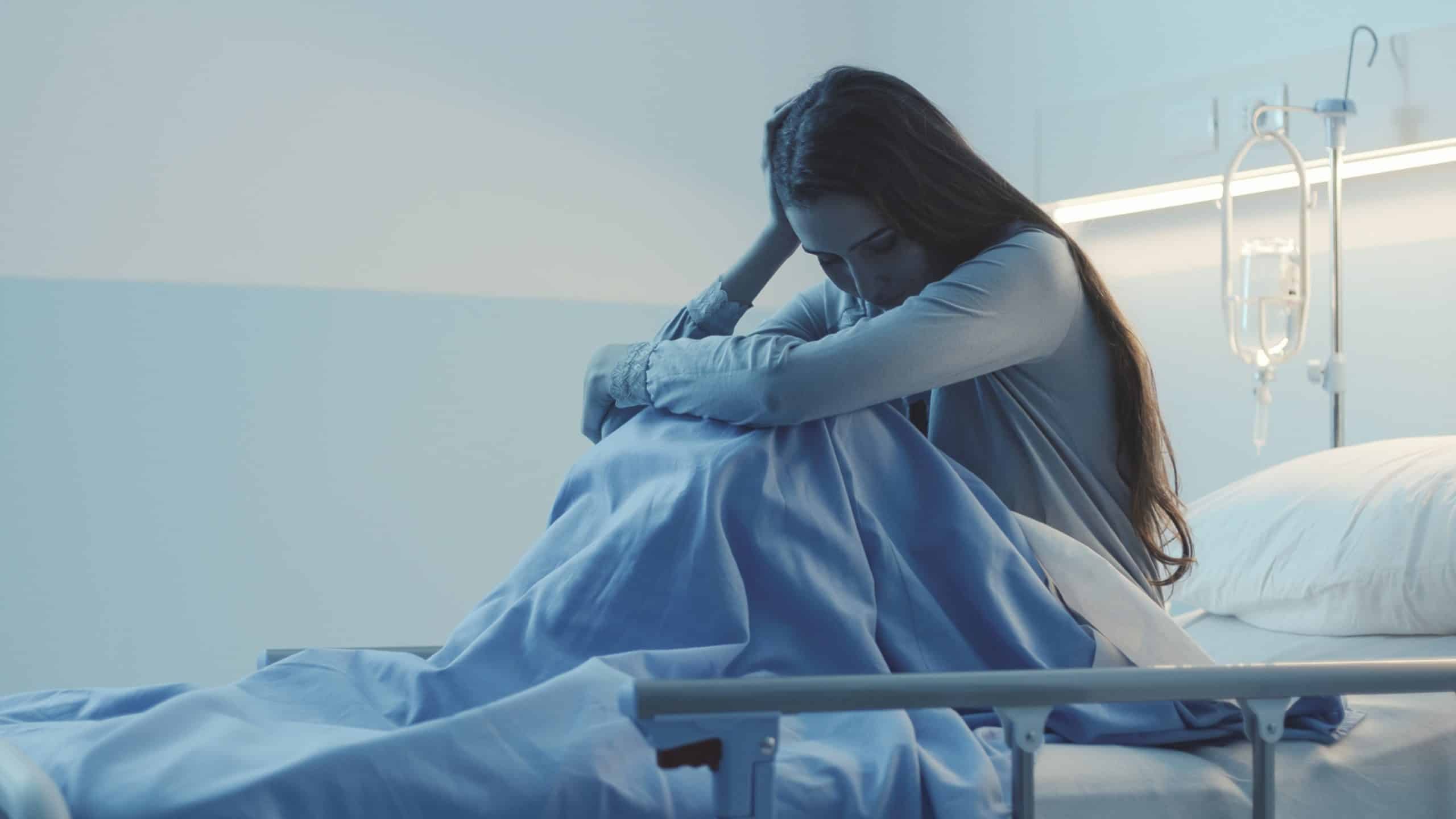
Mary (not her real name) was administered MDMA in a Swiss clinic in 2025. She had been worn down by several years of complex PTSD, severe enough that she had been granted invalidity insurance. She was prescribed and treated with MDMA for C-PTSD by a psychiatrist, not her regular psychotherapist, as part of the Federal Office of Public Health (FOPH)’s compassionate access program.
Mary says she was given no warning of the risk of extended post-MDMA difficulties: ‘The psychiatrist said I might have a dip for about a week, but he did not anticipate that the aftermath could be so difficult to live through and survive. On the internet, everything pointed toward an amazing experience.’
Mary swallowed the pill — between 75 and 85 milligrams of MDMA, though she is not certain of the exact amount. Soon after, she began to feel the effects. She says:
I was having aggressive thoughts of hurting myself. Then I was in agony; a feeling of dying that I cannot put into words. The session lasted about eight hours and, while it was also deeply insightful, bringing up symbolic elements of my story and aspects of my past I had not previously been aware of, it was overwhelmingly intense, with traumatic material surfacing all at once.
This was only the beginning, as the aftermath lasted for many months, during which she was extremely unstable.
It has now been over a year since the session. Loud and busy environments are overwhelming. She developed tinnitus and struggles with derealization and depersonalization. She also experienced, for the first time in her life, a brief psychotic episode, hearing voices telling her to harm herself, alongside an existential collapse, extreme anxiety, and disturbing bodily sensations, such as feeling as though she was melting or had no skin. It also severely strained her relationships, bringing up acute feelings of childhood abandonment. She describes a persistent sense of inner collapse and suicidality, that has repeatedly led her to seek care in the emergency psychiatric room, even now, over a year after the session.
She says:
It took about eight months to feel some basic level of stability after the session; or at least okay enough to function at the most basic level. I am still in the process of getting back on my feet. The session did help me in some ways, such as better understanding my life, and I do not want to deny that. But I cannot convey how hard and destabilizing this therapy can be. I was left with a sense of inner collapse and fragility, alongside many other complications that need to be heard. This therapy can be incredibly dangerous. It was for me.
Mary’s case has not been formally reported to the Swiss Federal Office of Public Health. As far as the national regulatory system is concerned, it did not happen. She says:
The FOPH has a responsibility that needs to be taken much more seriously. It’s shocking to me that there is no extensive follow-up after sessions to better monitor the real effects and risks of these therapies given the acknowledgment that this therapy is experimental.
Four cases reported in 12 years
Since the use of existing legal provisions for limited medical use began gaining momentum in 2014, only four serious incidents have been reported to the FOPH: two deaths that occurred in connection with psilocybin treatment, one suicide attempt following MDMA therapy, and one case still under investigation, all between 2024 and 2026.
Physicians can report incidents and rate how probable the causal link is to the drug, from ‘no link’ to ‘possible’ to ‘probable’ to ‘definite’. The treating physicians involved assessed a ‘possible’ link in the MDMA suicide attempt case, which the FOPH recorded. Both deaths following psilocybin treatment were assessed as having no link. No incident in the programme has ever been classified as having a probable or definite link to the psychedelic treatment.
The FOPH tells us:
It is important to emphasise that there is a significant delay between the last recorded intake of the substance and the occurrence of the serious adverse events. All three known cases occurred during subsequent hospitalisations. Those hospitalisations took place five weeks to three months after the last substance session.
An estimated 2,580 authorisations for psychedelic therapy have been granted by the FOPH in individual and clinical settings since 2016. While the data suggests the program is quite safe, cases like Mary’s are not systematically reported. The FOPH adds:
The reporting of serious adverse events (SAEs) within the framework of limited medical use is currently not standardised. It cannot be excluded that there are unreported cases. Responsibility for the safety of the therapy and the reporting of serious adverse events lies with the physicians.
Pietro Gervasoni, Managing Director at swissethics, highlights: ‘The number of SAEs in Switzerland has no statistical value and permits no interpretation.’ In other words, we don’t know how common they are. Swiss researchers have developed a more comprehensive adverse effects scale, but this has not yet been widely adopted.
The lack of serious incident awareness in the field has prompted the FOPH to develop AutoStup, an online platform facilitating reporting for physicians. The website is expected to kick off in 2028. ‘The AutoStup project will, when implemented, create a standardised digital declaration platform. Future adverse events will be captured in a consistent format and compared across cases. Furthermore, a research mandate is not currently part of the FOPH’s remit’, says the national health authority. However, there will still be no mandatory requirement to report cases like Mary’s. It will be up to the physician to voluntarily file a report.
‘Possible’ or ‘probable’?
One psilocybin-related death was documented in a 2025 case report co-authored by PD Dr. Felix Müller, co-president of the Swiss Physicians Society for Psycholytic Therapy (SÄPT) - one of several professional associations involved in training psychedelic-assisted therapy practitioners in Switzerland. Published in Psychiatry Research, the report describes a man in his early sixties with a twenty-year history of recurrent depression who was admitted to a Swiss hospital in early 2023. His primary diagnosis at admission was a severe depressive episode without psychotic symptoms, though his history included episodes of delusions. He presented with hopelessness, low mood, rumination, anxiety, severe exhaustion and episodes he described as ‘brain fog.’ He had been in long-term psychotherapy and had undergone extensive neurological evaluation, including assessments for dementia, which found nothing.
Treated with psilocybin-assisted therapy under a FOPH exceptional authorisation, the patient died by suicide three days after his final session - a timeframe the authors note is in close temporal proximity to the treatment. ‘At that time, there was no requirement from the FOPH that serious adverse events had to be reported directly,’ PD Dr Felix Müller tells us. ‘The suicide was reported in the final report to the FOPH. It is possible that the FOPH recorded it differently; I have no insight into that.’
The paper stops short of establishing a definitive causal link, noting that psilocybin-triggered delusions and emotional dysregulation ‘may have contributed’ to the outcome. The treating physician assessed no causal link between psilocybin and the patient’s death.
The case was subsequently presented at a Bern gathering of PAT practitioners in early 2026, where FOPH representatives were also present, according to a source who attended and wished to remain anonymous. The source described the situation as extremely complex, noting that the two practitioners involved could not have done more to help the patient.
Suicidal ideation not necessarily a serious incident
Behind the statistics lies a harder question: in a patient population already at elevated risk, where does clinical deterioration end and a reportable serious incident begin? The country’s psychedelic therapy patient cohort is composed of severely and chronically ill psychiatric patients with chronic depression, complex PTSD or severe anxiety disorders. These are people who have spent years, sometimes decades, experimenting with antidepressants, psychotherapy, and hospitalisation without lasting relief. ‘This translates in particular into a higher risk of suicide than that of the general population’, notes the FOPH.
The head of Geneva’s PAT programme, Professor Daniele Zullino, tells us that suicidal thoughts following treatment, as was the case for Mary, are not necessarily reportable as serious incidents. He argues: ‘For a population where such thoughts are part of the clinical baseline, reporting every instance would not meaningfully change the safety picture and could create misleading alarm. We expect suicidal ideation. It is not relevant to report it.’
He adds: ‘The reporting rate is rather poor - not only in Switzerland - because it relies on physicians taking the initiative. The process is also more burdensome for private practices, which are not used to filling out these forms.’ He acknowledges: ‘If serious incidents occur, it puts the entire movement at risk.’
‘We expect suicidal ideation. It is not relevant to report it.’
Real-world medicine versus clinical trials
Neither a July 2025 overview co-authored by Professor Matthias Liechti of University Hospital Basel and Peter Gasser - the psychiatrist who conducted Switzerland’s first modern LSD therapy trials - nor a 2022 paper by Gasser and Oehen made any mention of negative outcomes. The 2025 paper described the programme’s history, legal framework, patient characteristics, and training infrastructure in detail. The 2022 publication documented a joint private practice group therapy programme between 2014 and 2020 and reported that ‘the majority of participants improved by clinical judgement, and no serious adverse events (SAEs) occurred.’ The paper concluded that the results ‘suggest the feasibility and safety of this approach.’
We asked Peter Oehen if SAEs were defined correctly in his and Gasser’s 2022 paper, to mean any serious adverse event that occurred, whether attributed to the drug or not by physicians. He tells us: ‘The term was indeed not used correctly in our paper and context,’ he told us. What the authors had meant, he clarified, was that no serious adverse reactions occurred, which were causally linked to the psychedelic treatment by physicians. Gasser did not respond to an interview request.
Questioned regarding the lack of reported SAEs, Professor Liechti responds: ‘PAT in Switzerland is not a clinical study but more real-world medicine. Thus, physicians would not normally make SAE assessments.’
A different picture in clinical trials
Switzerland’s psychedelic-assisted therapy programme occupies a regulatory blind spot between the country’s two main health authorities. The FOPH issues the authorisations but has no pharmacovigilance infrastructure. Swissmedic, Switzerland’s therapeutic products regulator, oversees clinical trials and monitors the safety of approved medicines through its pharmacovigilance division. Swissmedic told us: ‘The psychedelic substances in question are not regular authorised medicines. For this reason they are not subject to the reporting obligation to Swissmedic’s pharmacovigilance system.’ Limited medical use authorisations, Swissmedic confirmed, are granted by the FOPH and not by Swissmedic, meaning no reports need be filed with them.
Swissmedic told us that serious adverse events from clinical trials go to ethics commissions, not to Swissmedic, and that Swissmedic receives only SUSARs: suspected unexpected serious adverse reactions. Swissmedic confirmed that since 2014, fourteen clinical trials have been authorised in Switzerland involving psilocybin, LSD and ketamine. Across all fourteen trials, five of which are still ongoing, not a single SUSAR has been reported. The institution notes that SUSARs must meet three cumulative criteria: the event must be serious, related to the substance, and unexpected.
Limited follow-up
Professor Zullino confirmed that Geneva University Hospital had declared one serious incident via hospital pharmacovigilance units, a parallel reporting channel whose ultimate destination, given Swissmedic’s confirmation that psychedelic substances fall outside its remit, remains unclear. In a written communication following our interview, he disclosed that a second serious incident had been reported at his centre shortly after we spoke. ‘I cannot tell you exactly what it involves,’ he wrote, ‘but the event confirms what you are reporting.’ Professor Zullino confirmed the FOPH has been informed of the second case.
Under the current system, a physician’s obligation to the FOPH ends when the 12-month authorisation period expires. There is no requirement for long-term follow-up or a mechanism to capture what happens to a patient six months after their last session. Professor Liechti confirms: ‘Follow-ups are also not typically done in clinical studies. Thus, events happen after study completion that are not recorded.’ The FOPH adds: ‘Long-term data collection is not possible with the FOPH’s current resources.’
Mary’s suffering is not captured in any registry. As far as the system is concerned, her treatment concluded without incident. She says:
I don’t blame my doctor; he stood by me and helped every step of the way. But my case simply illustrates how experimental this type of therapy still is, and how research, doctors, and the healthcare system as a whole need to recognize that there are very real, potentially life-threatening risks. It is a miracle I am still alive given how hard this therapy was for me.
We’ve been in touch with Mary for several months, and are encouraged to hear she feels she may have turned a corner in her recovery. She says:
For the first eight months, I thought a medical professional would understand and be able to help me. And then I realized, none of them know what is going on, and I have to take care of myself. I stopped fighting the symptoms, I let myself go through panic attacks. I stopped ruminating so much. I went for walks. I could see friends and talk to them about their lives. Life is not the same, but after going through the last year, I’m so grateful to wake up and not worry if I’m going to survive the day.
The field needs to learn from cases like Mary’s - what are the predictors of post-psychedelic difficulties, what went wrong in her case, and how can people in post-psychedelic crises best be supported? And finally, are the public being given accurate information about possible unwanted side-effects? Are psychedelic physicians even aware of these possible side effects?


