


A very big day for the young psychedelic industry yesterday, with news that Eli Lilly, the world’s biggest pharmaceutical company, is paying $3.8 billion for psychedelic developer AtaiBeckley, which is developing 5meoDMT, DMT and MDMA treatments for mental illness. This follows earlier billion-plus acquisitions of psychedelic drug candidates by AbbiVie and Otsuka. Meanwhile, one of the best-known, best-paid facilitators in the underground, Dr Samuel Lee, got charged with manslaughter this week when one of his customers died after taking ‘the heart protocol’. Her name was Tina Sodhi, and friends tell me she was a really lovely person. I wrote about Dr Lee last year, and will write about him again, probably next Friday. But today, I’m continuing with my Esalen / Bay Area theme, with the transcript of the talk I gave at Esalen on ‘spiritual emergencies’.
I’m going to talk about the concept of ‘spiritual emergency’. This is a concept that emerged here, at Esalen, to mean a turbulent spiritual experience which has some features of pathology or even psychosis but is actually a transition to a higher state of spiritual development. This concept has had limited clinical uptake outside of transpersonal psychology but still been helpful to some people in crises, including me - I co-edited a book on spiritual emergencies and found the framing helpful during a messy post-ayahuasca quasi-psychotic episode.
The term is now becoming more widely used because of the psychedelic renaissance, it’s taught in some of the big facilitator training programs and is promoted by MAPS and its psychedelic harm reduction organisation Zendo Project. If you’re in a post-psychedelic crisis and you seek help from a psychedelic integration coach, there’s a good chance they may tell you ‘you’re having a spiritual emergency’.
Much as this concept is helpful to some (including me), there is a risk of harm if the concept is clumsily imposed by therapists and coaches on people in crisis. It could be iatrogenic and unethical to impose your religious frame on people in vulnerable states, especially if they would benefit from conventional care or medication or they’re just not into new age spirituality
In addition, the concept of spiritual emergency can sometimes be wielded ideologically, as a way to defend the psychedelic movement and deny that psychedelic drugs ever have serious adverse consequences, rather than helping the person in crisis.
The roots of ‘spiritual emergency’ in the early years of Esalen
Right from its founding, Esalen was conceived of as a place where disruptive unusual experiences could be processed better than in psychiatric care, due to the life-experiences of its co-founder, Dick Price.
In his 20s, Price got very into Taoism and Buddhism while studying at the American Academy of Asian Studies (which later became CIIS) in San Francisco. In 1955, when he was 24, he experienced what Jeffrey Kripal in his book on Esalen terms ‘mystical mania and institutionalization’, possibly triggered by mismatch between his mystical temperament and his cold, conservative and demanding parents. The mania was also triggered after he met his future wife - he heard a voice saying he would marry her. They got married, he became manic, and one night he was arrested and hospitalized.
He interpreted his psychosis as a spiritual awakening (this is a quote from Jeffrey’s book):
Price emerged from the psychotic episode “washed clean.” He would later describe it as a “transitional psychosis”
His parents then lied to him to keep him hospitalized in a private hospital, while they annulled his marriage and paid his first wife to disappear. This second hospitalization was a brutal experience involving successive treatments with Electro-Shock Therapy and induced insulin comas. Price later said:
There was a fundamental mistake being made and that mistake was supposing that the healing process was the disease, rather than the process whereby the disease is healed. The disease, if any, was the state previous to the “psychosis.” The so-called “psychosis” was an attempt toward spontaneous healing, and it was a movement toward health, not a movement toward disease.’
Then he came out of the hospital, recovered, and in 1960 he met Michael Murphy at the American Academy of Asian Studies, and the rest is history.
So part of the founding story of Esalen is the idea that spiritual awakenings can be mixed together with what looks like psychological disturbances, even extreme disturbances like mania and psychosis. But Price argued such mystical-psychotic experiences shouldn’t be treated as just a breakdown or pathology - they can actually be a move towards greater wholeness, health and spiritual maturity
Others made a similar point, that psychotic breakdowns could also be meaningful spiritual experiences, such as Jung, Roberto Assagioli, and contemporaries of Dick Price like RD Laing and John Weir Perry. A better treatment than anti-psychotics and hospitalisation in an ER ward, according to Price, would be to find the right container - like Esalen (although it is on a cliff, so maybe not…), or John Weir Perry’s Diabasis House in SF, or Laing’s Kingsley Hall in London, where you can let the experience play itself out. Price and his second wife, Chris, developed a method he called Gestalt Practice to support people experiencing extreme states of consciousness.
Price’s personal life didn’t necessarily fit the ‘spiritual emergency’ model entirely (i.e a turbulent transition to a higher state), in the sense that he had further psychotic episodes and needed to be hospitalized at least one further time. In 1969, he had a psychotic episode after taking ibogaine. They tried to contain it at Esalen for the first months, which led to some interesting episodes. Apparently, when Richard Alpert appeared there in his new incarnation as Ram Dass, complete in Indian robes and prayer beads, the manic Price (who was a college wrestler) rugby-tackled him, dragged him into a stream and got him into a chokehold until he admitted he was a phony! His co-founder, Michael Murphy, still laughs at the memory of Price and Alpert rolling down the lawn, Alpert’s Indian robes wrapping around them.
Eventually, the staff at Esalen agreed Price needed to be taken to the local hospital. John F. Callaghan, writing for the Gestalt Legacy Project, recalls:
At the hospital, during the admission process, Dick almost convinced the hospital staff that he was actually his friend, Dr. Jack Downing — the person who had taken Dick to the hospital.
Still, apparently after this episode Price remained in very good health until the end of his life in 1985. Robert Forte, who lived and worked at Esalen in the early 1980s, tells me:
Dick was one of the most fantastic people. I used to think, this was a guy who had life by the balls. He was in his 50s. He was incredibly fit and athletic. He had Esalen, he had this beautiful little house, he had this gorgeous wife and this cute little boy. He’d wake up every morning and you’d see him do his yoga out on the deck, he was very disciplined with his yoga. And every day he would walk up the canyon and sit and do his meditation. And I just thought, if I can be reborn, I want to get reborn as Dick Price.
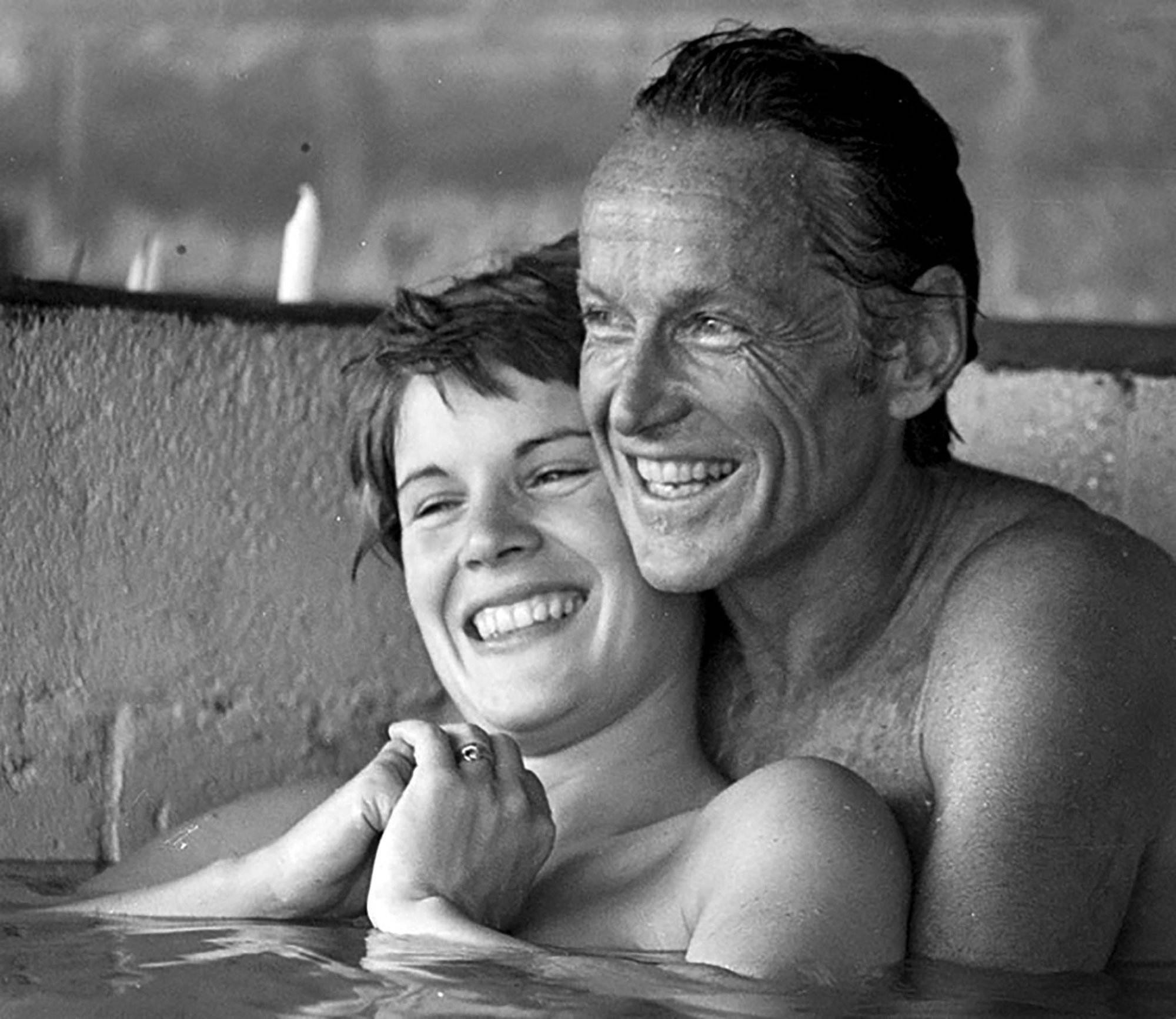
So Price’s life does stand testament to the possibility one can have a very rich, fulfilling life after experiencing one or more psychotic episodes - and maybe spiritual practices and a non-judgemental context like Esalen can help with that.
The Grofs and spiritual emergency
In the late 1970s and early 1980s, the concept of ‘spiritual emergency’ was developed by Stan and Christina Grof here at Esalen. Stan was a Czech psychiatrist who supposedly supervised thousands of LSD experiences with patients (although his one-time disciple, Robert Forte, says he now thinks that total must have been exaggerated). He moved to Esalen from Johns Hopkins in 1973, leaving academia in order to explore the far reaches of human consciousness, including working with psychedelics illegally.
It was at Esalen in 1975 that he met his second wife Christina . She had previously experienced psycho-spiritual crises connected to life stressors (the birth of her first child, and then divorce and losing custody of her children), and then she had a five-day ‘spiritual emergency’ after taking psychedelics with Stan at Esalen.
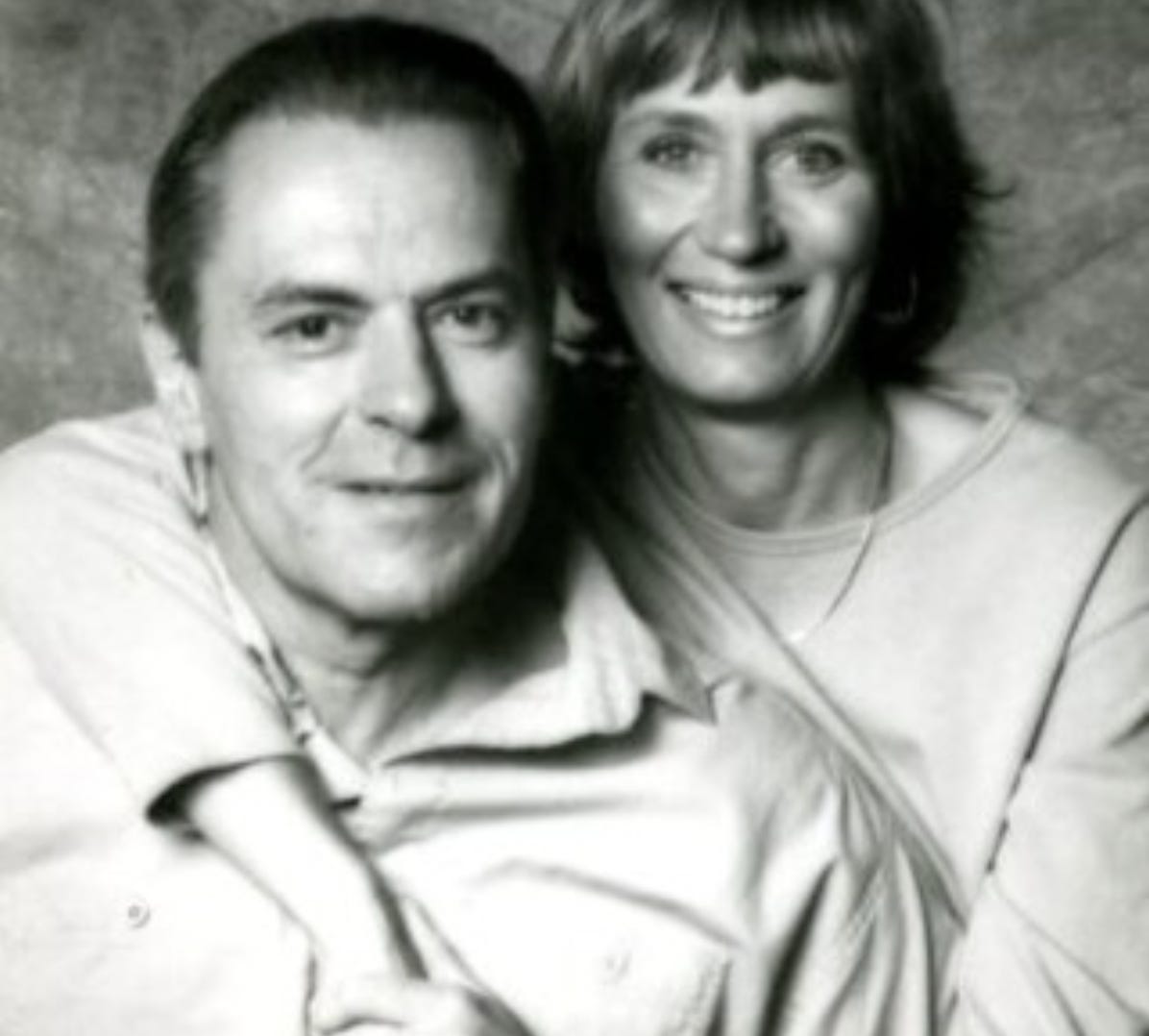
Together, they developed the idea of the ‘spiritual emergency’ and published a collection of essays with that title in 1989. The term denoted a psycho-spiritual crisis often prompted by intense spiritual practices (yoga, meditation, psychedelics) although it could be spontaneous as well. Their term included UFO experiences, channeling, near death, out of body experiences, and even spirit possessions. A spiritual emergency was characterized by intense and disturbing symptoms - kundalini, mania, Messianism, weird synchronicities or paranormal events, a blurring of the inner and outer worlds and intense archetypal content often with religious themes. They insisted such experiences were not organic pathology (ie, not physical), but rather an ‘evolutionary crisis’, a turbulent spiritual emergence into a higher state.
So ‘spiritual emergency’ included both a developmental state theory - the individual is emerging into a higher or ‘more evolved’ state of development and maturity; and also a metaphysics and teleology. Each moment a human ‘popped’ into a higher state was part of a collective flowering of human consciousness into cosmic consciousness, part of the evolution of humanity into the superhuman. This idea fitted very well with the evolutionary spirituality of Esalen - we’re all evolving into superhuman mutants (or some of us are, anyway - there could be a subtle or not so subtle elitism to evolutionary spirituality, as I wrote in this article).
What does it mean practically if someone is diagnosed as experiencing a ‘spiritual emergency’ as opposed to common-garden psychosis or mania? According to the Grofs, they should receive support, sympathy and sanctuary in a safe place (it helps if you’re affluent and can afford to take weeks or months off work and have a safe peaceful beautiful place to be, like Esalen). Stan Grof coined the term ‘holotropic’, meaning the psyche seeks wholeness - the patient (or ‘experiencer’) should help the psyche seek wholeness by going in and through the experience to complete the transition into a higher and more evolved state. Sometimes that might involve more psychedelics, Holotropic Breathwork or other psycho-spiritual practices to achieve catharsis, even if that means intensifying the experience. Avoid hospitalization, and avoid anti-psychotics or tranquilizers, according to the Grofs, because they dampen the psyche and prevent it completing the transition to wholeness. They wrote:
When these states of mind are properly understood and treated supportively rather than suppressed by standard psychiatric routines, they can be healing and have very beneficial effects on the people who experience them
The exception to their wariness towards psychiatric medication is psychedelics, because they were thought to help the client go in, through and out the other side.
The Grofs published Spiritual Emergency in 1989 - a collection of essays from figures like Jack Kornfield, Ram Dass, John Weir Perry, RD Laing and Roberto Assagioli, who offer a range of perspectives on this domain. It’s a really helpful book, sort of a Be Here Now for the dark night of the soul. They also held a four week seminar on the topic here at Esalen (the tapes of this might exist somewhere), and they established the Spiritual Emergence Network (SEN), through which hundreds of people contacted them each year seeking help for psycho-spiritual crises.
The veteran psychedelic researcher, guide and writer Robert Forte worked with Grof at Esalen, and I reached out to him to ask for his reflections. He left academia in his early 20s to work with Grof at Esalen. Grof, 20 years his senior, was a father-figure to him, taught him how to trip-sit (or ‘baby-sit’ as they called it), and taught Forte his Holotropic model, including the four stages of birth that people supposedly go through during psychedelics. Robert was a believer in this model at first, but came to think that, actually, people were just telling the charismatic guru what he expected to hear. He also became sceptical of ‘spiritual emergencies’.
I initially believed in the idea that we need a spiritual awakening and we all have to go through this passage. But after a while, I realized, this is stupid. I didn’t see any ‘spiritual emergencies’ in two years, I did see psychosis and early-adult-onset schizophrenia. But we would refer people to a few places where they could get alternative treatment and not get over-medicated. I still believe in that.
He adds:
I learned another thing about Stan’s personality - he has a very controlled persona, but he loves to see people break down and break through in sessions, it was like a triumph if you were having this abreaction.
And did that make him less sensitive to the possibility of people simply having breakdowns?
Yeah, he was distant. He didn’t want to be involved in stuff like that. He was above that. He didn’t want to deal with personal issues. He didn’t really want to deal with mental illness. Just ventilate it and keep going into the transpersonal.
There are even doubts if Christina Grof - patient zero for Spiritual Emergencies - could be said to have had an experience that cleanly fits the Grofs’ own model of a crisis followed by an emergence into a higher / more evolved state of development and maturity. As she recounts in her 1993 book, The Thirst for Wholeness, when she moved to Esalen and had her psycho-spiritual crisis, she ended up developing alcoholism for 12 years, and was helped to recover through AA. Good for her for admitting that and talking about it honestly.
1990s-2000s: The concept of Spiritual Emergency struggles to establish itself clinically
In the years since the Grofs introduced the concept of Spiritual Emergency, it has struggled to establish itself clinically and academically. This is true of many of the therapeutic innovations developed in the hot-tubs at Esalen, like Gestalt therapy, Internal Family Systems and Transpersonal psychology. It’s just a different form of validation and assessment, one more based on vibes and charisma than peer-review and falsification. The innovations developed in the informal spaces of Esalen can spread in alternative healing networks, but they often fail to cross back into the mainstream.
The Grofs struggled to define the term themselves. They wrote in their 1989 book:
Episodes of nonordinary states of consciousness cover a very wide spectrum, from purely spiritual states without any pathological features to conditions that are clearly biological in nature and require medical treatment. It is extremely important to take a balanced approach and to be able to differentiate spiritual emergencies from genuine psychoses.
What does that mean - ‘clearly biological’? Are there clear biomarkers for schizophrenia? Could the Grofs be at risk of falling into too rigid and neat a Soul / body split - ‘our psychotic crises are spiritual, while your psychotic crises are clearly biological’ ?
We also need to keep in mind the historical context in which the term was introduced - in the 1980s, as psychedelic research and practice become outlawed and move into the illicit underground. Was ‘Spiritual Emergency’ in part a defensive posture to defend these banned substances and to spiritualize any adverse events that clients might experience? Did the label ever cause harm? There was at least one psychedelic-related death at Esalen under Grof’s supervision, we simply have no idea how many other Serious Adverse Events there were, because no outcomes data is kept in the underground.
The Spiritual Emergence Network kept on running through the 1980s and 1990s, and was housed at the California Institute of Integral Studies in 1998. But it declined in the Noughties and is barely going today, as far as I’m aware. Meanwhile, there have been several attempts to validate the SE concept and disseminate it into mainstream psychiatry. The most successful was David Lukoff’s introduction of the diagnosis ‘Spiritual or Religious Problem’ into the DSM IV in 1994. But I don’t think the diagnosis has been used much by psychiatrists, if at all.
More recently, Goretzki et al developed a Spiritual Emergency Scale in 2009, which Bronn and McIlwain sought to validate in 2014. They found it overlapped with positive symptoms of psychosis (voices, visions and so on). Harris et al in 2014 suggested the scale did not capture the ‘crisis’ aspect of Spiritual Emergency. Then a Delphi consensus study by Harris et al, of 20 experts, failed to find consensus over what the term actually meant. Any term that can cover everything from UFO encounters, spirit possession, channeling, dark nights of the soul, kundalini awakenings, to post-psychelic and post-meditation crises is probably just being asked to do too much heavy lifting.
But the term lives on in informal networks of ‘lived experiencers’ and people who want a better label for their extreme experiences than strictly-pathological ones. If you search on YouTube and TikTok, you can find many videos along the lines of ‘10 signs you’re having a spiritual emergency’. Phil Borges’ 2017 documentary CrazyWise is enormously popular, with its somewhat Romantic exploration of how unusual mind-states are much more validated in non-western cultures, while his TedX talk has 8 million views.
I myself found the SE frame helpful, when I experienced extreme derealization / psychosis after a 10-day ayahuasca retreat. For several days, I wasn’t sure if I was in a dream, or the afterlife. Luckily, I got home from the retreat safely, my friends took care of me, and a few days later the experience passed and I was none-the-worse. I even look back on the experience as interesting, and net-positive - it helped me open my heart to my friends, and learn to rely on others. I was very lucky I wasn’t arrested or hospitalized, and that my friends were also familiar with ‘spiritual emergencies’ and didn’t freak out. Three years after that, in 2020, I co-edited Breaking Open, which is a collection of first-person accounts of spiritual emergencies or, if you prefer, psycho-spiritual crises. But, six years later, I find myself a little more wary of the term. Let me explain why.
Spiritual Emergency and the psychedelic renaissance
The concept of SE has become more widely known in the last few years due to the psychedelic renaissance. Probably all of you are familiar with the renaissance, but just to recap - in the last 20 years, there’s been a surge in research into psychedelics, a lot of positive media, tens of billions in capital investment, and even an executive order from President Trump supporting psychedelic medicine. This is after psychedelics were banned in the late 1960s and early 1970s, after a moral panic that college kids were taking them and losing their minds.
The psychedelic renaissance has been extraordinarily successful at rehabilitating the image of psychedelics. They’re not drugs, they’re medicine. If you sell them you’re not a drug dealer, you’re a ‘space-holder’ or a concierge. There’s no bad trips, just ‘challenging experiences’. You’re not vomiting, you’re purging. And you’re not experiencing a serious prolonged adverse event, you’re having a spiritual emergency.
