Homer on drugs
Drugs in The Odyssey are typically foreign, female-facilitated, and a potential threat to male identity and virtue. But not always.
It’s officially the Summer of Homer, with Christopher Nolan’s blockbuster adaptation of The Odyssey making a fortune at the box office and sparking off an intense discussion about all things Homeric - is the film too woke, as Elon Musk has claimed? Is it trashy, as Odyssey translator Emily Wilson claimed? I personally enjoyed it, though it has the usual Nolan flaws of lack of humour and sexiness. It inspired me to read The Odyssey for the first time, and it’s cracking!
Come to our free seminar this coming Thursday on medication for post-psychedelic difficulties, featuring an all-star panel of experts. Sign up here.
I never studied ancient Greek at school, but discovered it in my 20s. Every time I read an ancient Greek text I feel at peace with the world. Ancient Greek literature was, I shit you not, central to my recovery from PTSD in my 20s - not just the Stoics, but also Plato and Sophocles were healing balm for my distempered mind.
I particularly loved Sophocles’ late play Philoctetes, about a Greek warrior who is cursed by the gods, and cast out of civilization because of a festering snake-bite wound that makes him scream in agony. He endures his exile and disgrace bravely, and through his endurance he develops an inner strength, an authenticity and closeness to the divine. At the end of the play he is healed by the gods and becomes a key player in the overthrow of Troy. In Jungian terms, Philoctetes taught me to take pity on the dissociated / exiled parts of myself, and the healing and grace we can find when we do that.
Reading ancient Greek literature makes me feel like this quote from Machiavelli, which I put at the start of my first book, Philosophy for Life and Other Dangerous Situations:
When evening comes, I return to my home, and I go into my study; and on the thresh-hold, I take off my everyday clothes, which are covered in mud and mire,and I put on regal and curial robes; and dressed in a more appropriate manner I enter into the ancient courts of ancient men and am welcomed by them kindly, and there I taste the food that alone is mine, and for which I was born; and there I am not ashamed to speak to them, to ask them the reasons for their actions; and they, in their humanity, answer me; and for four hours I feel no boredom,I dismiss every affliction, I no longer fear poverty nor do I tremble at the thought of death; I become completely part of them.
The classics give one a hinterland, an inner space, a cool infinity pool where you can retreat and reflect on eternal truths rather than getting sucked into the maddening daily doomscroll. And in that place of cool inner reflection, you can also find insights into the burning contemporary issues of the day.
For Nolan, the burning contemporary issue appears to be how new technology can destroy social norms and up-end civilizations - that was the theme of Oppenheimer, and he sort of makes it the theme of The Odyssey.
Me, I was struck by Homer’s discussion of drugs.
The story of the Odyssey is the story of middle-aged men in danger of losing their minds and forgetting who they are and where they belong.
And you may ask yourself…how did I get here? And you may say…my God, what have I done!
The threats to their identity come in the traditional forms: sex, drugs, and rock n’ roll (or music). But these threats can also bring healing and restoration.
Homer uses the term pharmakon to describe drugs, pointing to this dual nature - it can mean both a cure and a poison.
There are several incidents involving mind-altering drugs in The Odyssey, and none at all in the Iliad. The Iliad is a straight battle epic, while the Odyssey is a Lynchian road movie.
The incidents include:
Helen, Menalaus’ unfaithful wife, handing out an after-dinner drug she picked up in Egypt called nepenthe, which ‘banishes grief and anger and brings forgetfulness of every ill’. It’s so potent that a man who drank it wouldn’t weep even if his mother and father died or his brother were slaughtered before his eyes. Sounds like opium or a dissociative.
The lotuses on the island of the lotus-eaters, which make Odysseus’ sailors forget who they are and where they came from, bringing a stupefying and dangerous bliss
Circe the witch’s pharmaka lugra, or ‘baneful drugs’, which turn Odysseus’ sailors into swine. Luckily, Hermes gives Odysseus another plant, Moly, which makes him immune to Circe’s potion. Two scholars in the 80s suggested Circe’s drugs were datura, while Hermes’ Moly was Galanthus nivalis, which counteracts the effects of datura.
Drugs in The Odyssey are seen as female-facilitated, exotic / foreign, and potentially a threat to (male Greek) heroic identity, to duty (returning home to your wife and country), and to memory, which is a crucial Homeric virtue (the first phrase of The Odyssey is ‘Sing, Memory’.)
The Greek aristocratic man goes off on his extended Gap Year, runs into some witchy foreign women who ply him with strange potions, and before he knows it he’s forgotten his name, marriage and pin code. Not so different to what happens every weekend in Medellin.
But Homer isn’t an old school anti-drug warrior - drugs can also heal, soothe, bond people. Wine for example is both the cause of the cyclop’s downfall, and also the basic social glue of ancient Greek societies. It’s the same with music - it can bring people together (no feast is complete without the bard to entertain the guests), but it can also evoke dangerous altered states where people forget themselves, as with the song of the sirens.
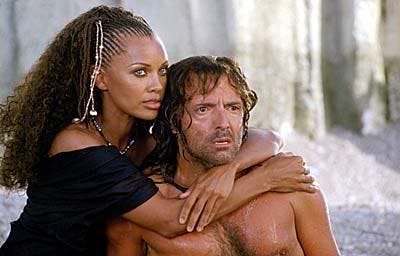
Nolan’s film combines the stories of Calypso, the nymph who entraps Odysseus for seven years, and the lotus eaters. Charlize Theron’s Calypso becomes a sort of unethical psychedelic facilitator, who uses drugs not to heal her client, but to build dependency in the client and impose her own will and desires on him.
This week I spoke with Rachel Bernstein, a therapist and expert on cult recovery and therapeutic / spiritual abuse. She told me:
People come to me after they’ve been harmed by someone who is a coach, healer, even people who are licensed therapists, who are in the field for the very wrong reason of needing to control other people’s lives.
This is precisely what one male victim told me about a life-coach and psychedelic facilitator who harmed a lot of clients in Utah. He told me she is a megalomaniac, that the thing that really gets her off is power over others, particularly power over wealthy, successful men.
The good healer tries to strengthen their client’s autonomy and agency. The sorcerer or witch tries to increase their client’s dependency on them.
Rachel and I noticed something else - a good therapist is there to support the client’s healing journey, and the therapist is very much a bit-part, in fact, you don’t know anything about their private life. But an egotistical, narcissistic or megalomaniac healer, it’s all about them. They’re the special one, they’re the important one, and their clients are really bit-parts in their big story. Beware the therapist or healer who is always telling you about their story. Beware the therapist or healer who is all over Instagram, especially in various states of nudity! Strong Calypso vibes…
Drugs, as Homer said, are pharmakoi - they can be used to heal, repair, connect and strengthen, or they can be used to weaken, to exploit, to increase the witch or sorcerer’s power and control over the vulnerable.
We need more resources on psychedelic-enabled abuse in therapeutic or spiritual contexts. It’s a gap in the safety net. CPEP just launched this new page with information and resources on the topic - have a look and let me know what you think. And read The Odyssey! Step into that cool infinity pool of classical wisdom.
PS, Musk says he wants to make a non-woke version of The Odyssey with AI. Ari Kuschnir has done the work for him.


