

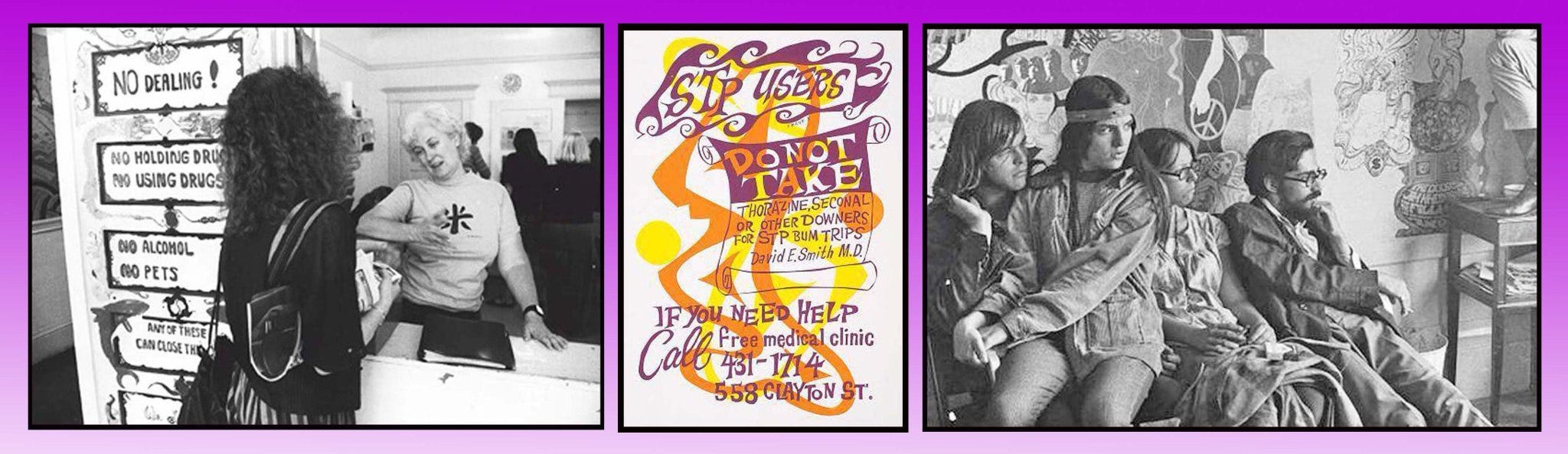
David E. Smith founded and ran the Haight Ashbury Free Medical Clinic, which supported thousands of hippies during the height of the psychedelic era, and which pioneered the ‘talking down’ approach used today by psychedelic harm reduction organisations around the world. I asked him about those days, his research on adverse events, and his memories of the Grateful Dead, Louis Jolly West, and Charles Manson.
EI: When did you set up the free clinic?
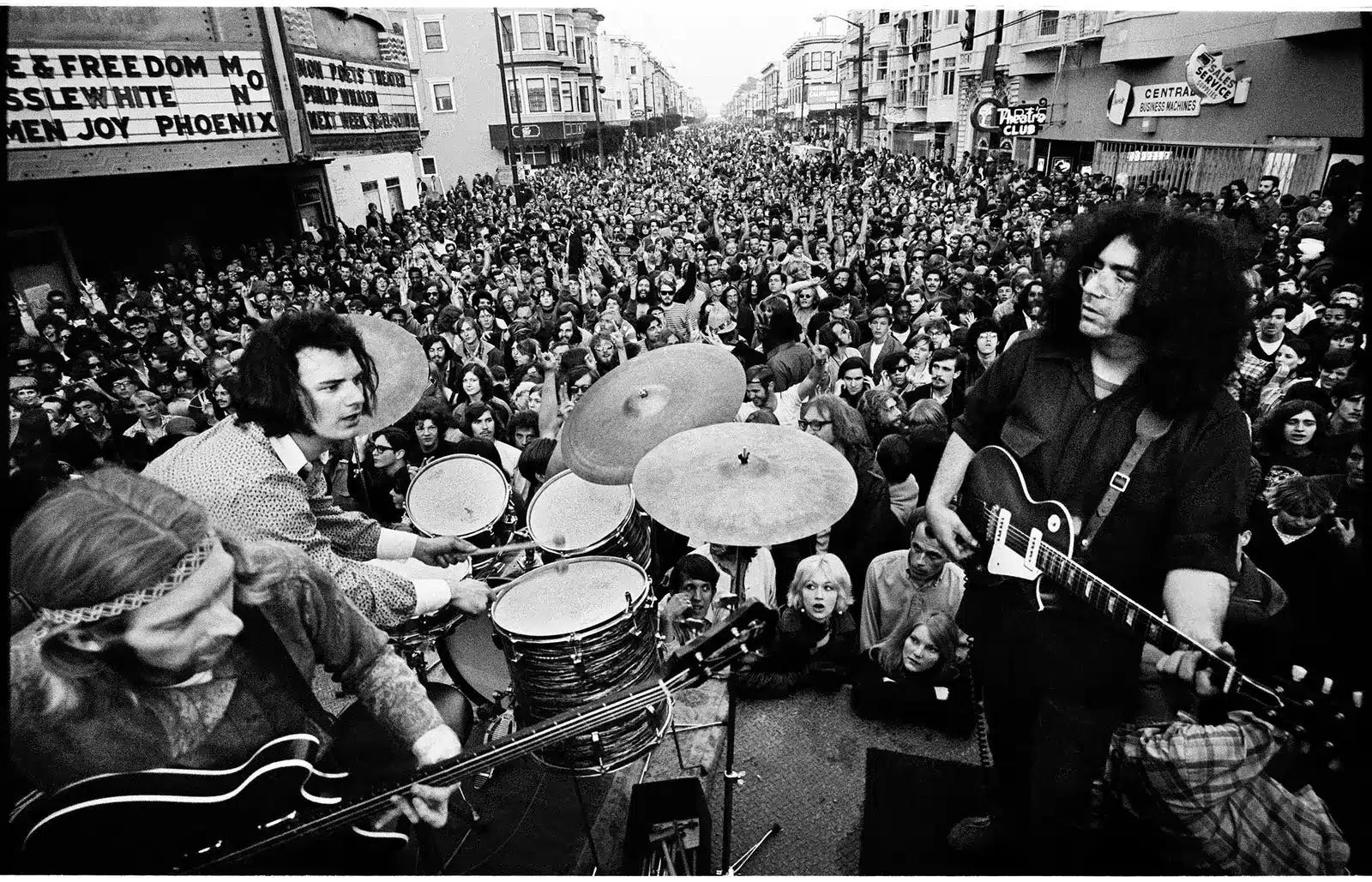
David Smith: June of 1967 at the beginning of the summer of love. That’s when all the hippies came, the philosophy of Better Living Through Chemistry. LSD was the agent that fueled the music revolution. Turn on, tune in, drop out. And there was 1000s of young people flocking to the Haight and using psychedelics, particularly LSD as a rite of passage. And we started seeing bad trips. And I noted that individuals who stayed with their friends did better than they were taken to the hospital in an ambulance. I ran the alcohol and drug abuse screening unit at San Francisco General, and I noticed that they were coming in there, but they were not well taken care of. And so I was at UCSF med school, which is right in the Haight, and so I was studying psychedelics and attending seminars emphasizing set and setting, and the talk down, the non pharmacological approach. So we set up a calm center and talked down large numbers of young people that were having adverse drug reactions. It was just a small percentage [of total psychedelic users], but it was hundreds of thousands of people taking LSD, so the number ended up being quite large. And that continues today with the clinic, as well as rock medicine, which offers medical services at concerts, including the Grateful Dead concerts.
How did you develop the talk down technique?
I noted that they were in Golden Gate Park, where they had all the hippies gathering and dancing and amazing and taking variety of psychedelics. And I noted, because I lived in the neighborhood, and I noted that those that stayed with their friends did better than those that went out to San Francisco General, where I ran the alcohol and drug screening unit and and I was studying psychedelics as part of my training, yeah, and doing studies on how the group can modify the drug reaction for better or for worse, right, right? Yeah, so that’s how we published our first papers on it in 1967.
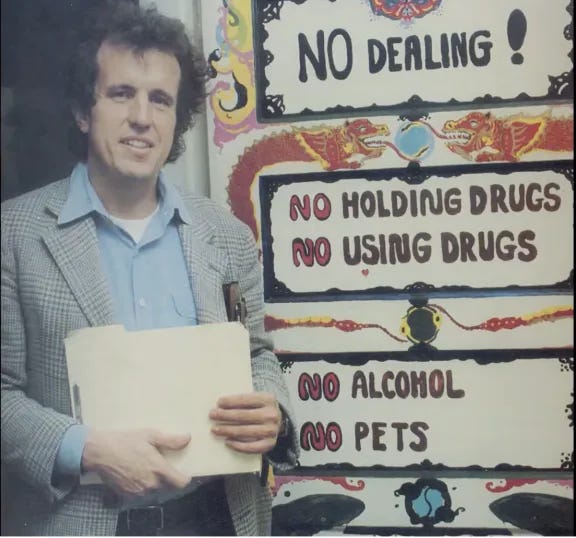
Did you get the sense that some drugs led to more bad reactions, or were most people doing LSD in those days?
Well, LSD was the drug of choice, but then some other types of drugs came on, particularly methamphetamine and PCP. And those were far more dangerous drugs, in which the talk down method didn’t work very well. The intervention needed to be pharmacological,
Did people ever come to your clinic in the days after a trip, still in distress?
Yes, we had what we called a psychological center, because for a few of them their psychedelic drug experience precipitated a more prolonged adverse reaction. We were able to study it clinically for research, and I called it The Psychedelic Syndrome. They would come in and say what a transformative experience it was, even if they had a bad trip, and then we also saw cases of Hallucination Persistent Perception Disorder, and then a small percentage had long term psychiatric reactions, including depression and psychosis.
Were you able to help those people with long term reactions?
Yeah, through our psych center, we had volunteer psychiatrists and psychologists. The calm center was monitored medically, but was essentially it was volunteer talk-down guides.
And so you were publishing papers as well about what you were seeing?
We started to, because there was so much misinformation about psychedelics that suggested everybody had this type of adverse reaction. Everybody didn’t, but there was a percentage that did, and there were characteristics of it. I started the Journal of Psychedelic Drugs, which was a peer-reviewed journal.
Wow. That’s amazing. And how old were you when you set up the clinic?
I was 28.
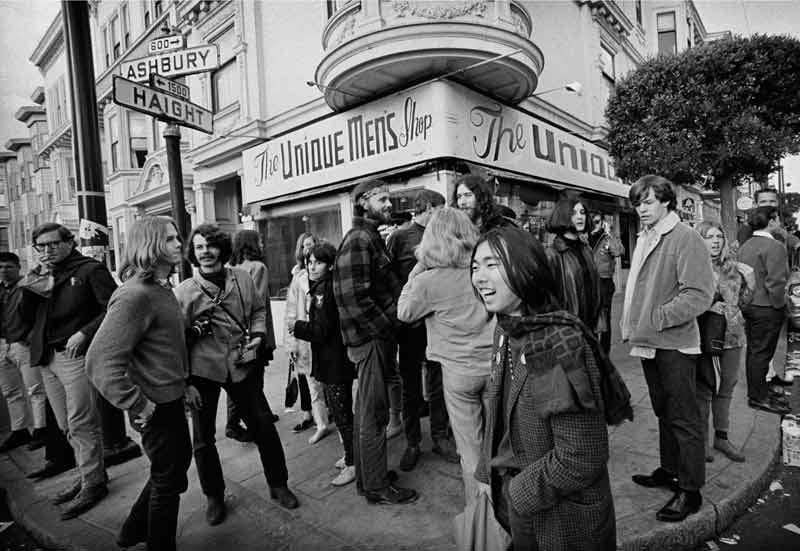
Was there a problem with runaways in Haight at that time? I saw you published an article back then on ‘health problems of runaways in Haight’.
There were a lot of runaways. They would leave their home or wherever their dwellings were, a lot of them are from alcoholic homes, broken homes. We now know that this creates adverse effects in terms of mental health - adverse childhood events. So it was a lot of kids that came that were just there for exploring, then as the thing moved on, the kids that were more disturbed came to Haight. And we published a book called Love Needs Care, in which we described the various characteristics of the kids that came there, including the ones that were more pathological. Our psychiatrist described them as predisposed to mental health issues and personality disorders. That was the minority in the beginning, but it became a significant minority as time went on. They were the ones that were more prone to getting involved with more addictive drugs like methamphetamine.
And I guess there were some predatory figures around at those times. I read the famous line: ‘rape is as common as bullshit in Haight Ashbury’. People preyed on the runaways.
Yes, that was very much the case. And the most famous of that era was Charlie Manson, right? He came to our clinic with his girls. We treated a lot of young women with sexually transmitted diseases. And then we would find out about the predators.
Did you meet Manson?
Yeah, he came to the clinic when one of his girls had an infection. His probation officer was Roger Smith, and Smith referred Manson to our clinic. And then I wrote a paper called The Group Marriage Community Case Study. It was about how a lot of hippies moved into communes. They might have a religious or spiritual basis, or a communal basis. His was like a group marriage. Everybody could have sex with anybody and he dictated who was coupling with who. It was like a modern-day sex cult.
Did you clock him as a sinister character?
He preached peace and love. None of us really guessed that, that he would be a sinister character. He was just another unusual guru.
I guess there were a lot of them around.
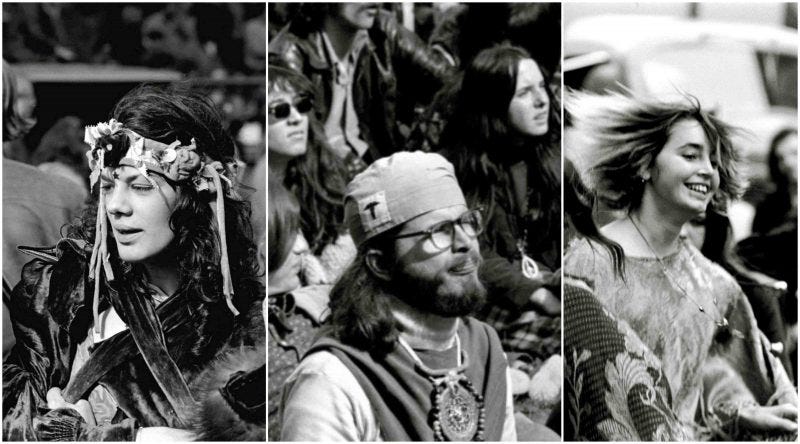
It was a battle of gurus, a very strange environment. Everybody preaching. Many of the preachers had taken LSD, and it was really hard to say which one would be the dangerous one. I think in retrospect, when you saw how much control he had, the girls would do anything. So maybe you could predict it, yeah. These things need to be studied more because a lot of cults are popping up now – we just watched ‘Trust Me I’m a Prophet’.
Same here. Pretty shocking.
It’s a fundamentalist Mormon cult but has many of the same characteristics as the Manson family. Of course, Charlie used to give his girl LSD, yeah, and make things move and do magic tricks. And they really thought it was magic, yeah.
Louis Jolyon West would turn up at the Free Clinic sometimes, wouldn’t he – a psychiatrist who was involved with the CIA’s MKUltra. Why was he there?
Well, he was a prominent psychiatrist, and our experience was that he was studying them [ie hippies]. Some of the people that he studied came to our clinic for medical and psychiatric reasons, but there’s a lot of misinterpretation that era. There’s a book out now called Chaos [about Manson’s links to the CIA] that suggested that the CIA backed our clinic, which is totally false. Our clinic was built on rock and roll and was supported by Grateful Dead concerts. It’s true that the CIA was lurking in the background of the psychedelic culture, that was written about Ken Kesey, wgo wrote an article called The Revolt of the Guinea Pigs.
Yeah, Kesey first took LSD in a CIA funded experiment didn’t he?
I have no doubt that the CIA was studying psychedelic drugs for various reasons, and there was some evidence that they read our journal of psychedelic drugs, because we were the leading publishers of psychedelic research right at that time. But lots of people read it.
What’s your perspective on the modern psychedelic renaissance?
Well, there was a period of time when I first started studying it, where they were looked upon as valuable therapeutic agents. There was a lot of interesting clinical experience and research at that time, but then you start having the adverse reactions, and then there was all the stuff about how it turned young people anti-establishment. Nixon was worried they wouldn’t be good soldiers to fight the war.And so that would be the second phase in the psychedelic revolution. And now the government is actually open to psychedelic research, and one of the reasons is they found out that soldiers that have post traumatic stress disorder can benefit from psychedelics. So a lot of the back and forth revolves around military issues. Remember all the young males that came to the Haight were draft age. The war in Vietnam is going on, and then you see your pool of draftees turning on, tuning in, dropping out. You get alarmed. Now they’re starting to perceive it as you send a young man off to war, then he has PTSD and the psychedelics help. So I think interface with the military has always been a factor. In fact, that’s how we started our heroin detox program - soldiers came back from Vietnam strung out on heroin and they felt they weren’t treated right at the VA.
Did Haight Ashbury calm down after the late 60s, or was the 70s and 80s just as wild in terms of kind of counterculture and psychedelic consumption?
The psychedelic hippy consumption was mainly in the 60s, while in the 70s, the hardcore addiction prone individuals dominated, so it was more speed and heroin. The 70s were worse, because the drugs were harder. Psychedelics added an element of culture and music, but the 70s were much worse.
So you were really the pioneer of psychedelic harm reduction.
Harm reduction was our focus with the psychedelics, with the harder drugs, we moved into abstinence and recovery, and 12 step harm reduction is still the big issue in the city.
How optimistic are you that psychedelics can become a kind of normal part of our culture and of our healthcare systems?
The concern is how the over-hyping and commercialization happens in medicine. Any medication can have benefits or it can have side effects. You don’t want to minimize side effects, because the drugs will lose credibility, but you don’t want to overplay side effects and say that everybody that takes them is going to get them.
Finally, did you enjoy the music in the Haight?
Psychedelic music was a huge force in the Haight – it was golden years. There was music everywhere, and our big support came from Bill Graham of the Fillmore auditorium. He organized benefits for us, with the Grateful Dead, Jefferson Airplane. Janet Joplin. Once upon a time, the Haight Ashbury was a leading centre of the psychedelic music scene - a very small area that was just like a cauldron of new ideas.
After the paywall, the media and Congress’ takes on Trump and RFK’s psychedelic executive order, plus a great new documentary on cults, 50 therapy red flags, Phish at the Sphere, and two folks I want to know more about in psychedelic culture.
