

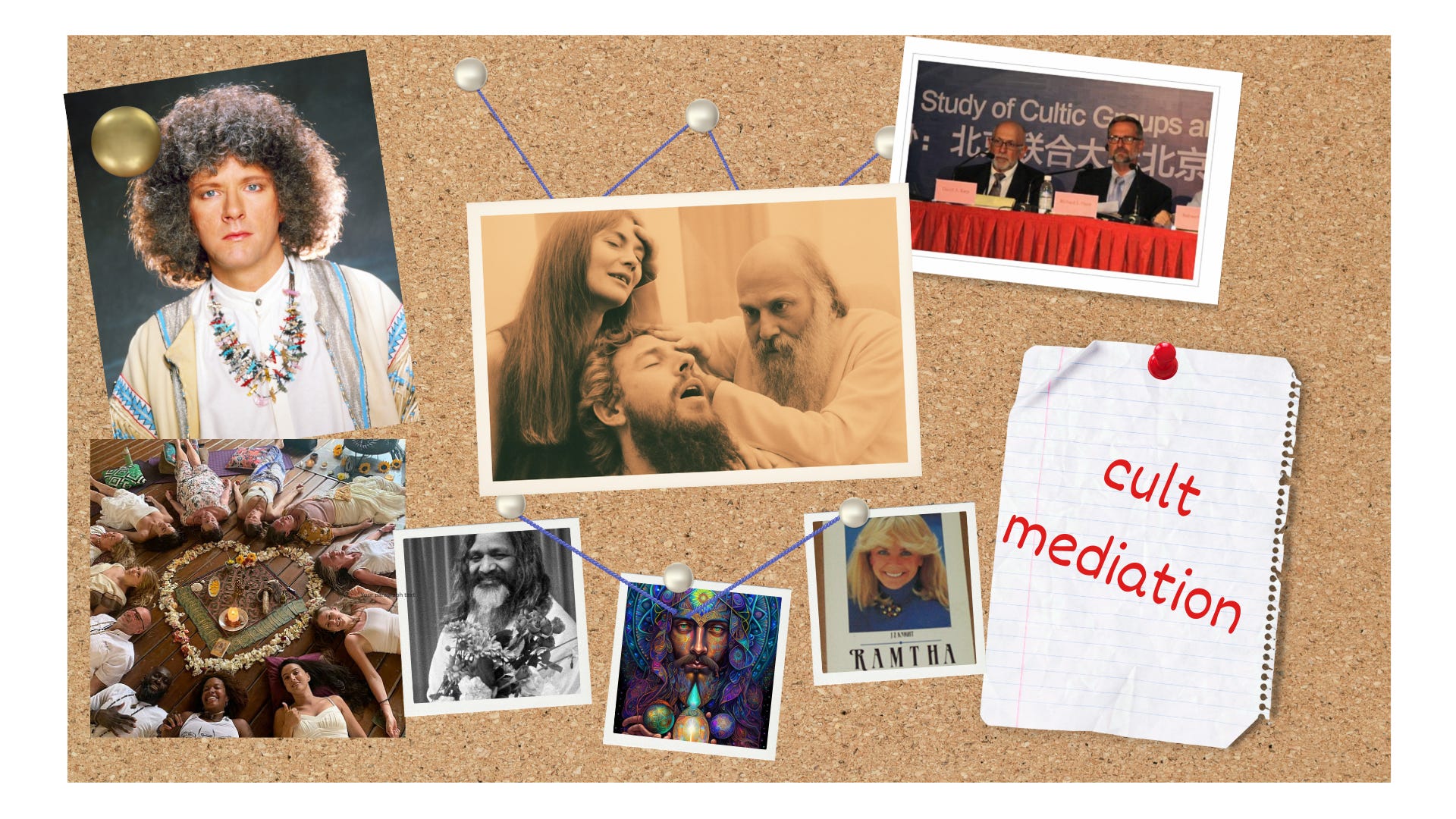
Patrick Ryan and Joe Kelly have worked on something called ‘cult mediation’ for the last 40 years, offering professional mediation services between families and loved ones who have joined groups or relationships which cause concern to the families. They have personal experience of such groups, having both been involved with Transcendental Meditation. I interviewed them to find out more about their work, how it’s different from cult de-programming, how groups or individuals can sometimes use psychedelics and other drugs to control members, and why and how such groups or individuals often target very wealthy people. What I learned from them is it’s useful to try and understand the attraction of such groups and what people get from them, to try and avoid the polarisation that affected the study of new religious groups / cults in the 1970s-1980s. I was also interested that they sometimes mediate with such groups, to suggest ways to reduce harm and avoid lawsuits. That is the sort of dialogue-based approach I would like to take with ‘somewhat-culty psychedelic groups’ as well. Thanks to Patrick and Joe for sharing their wisdom and experience for us.
What’s your working definition of the word ‘cult’?
Joe Kelly
We don’t even like the term, but unfortunately, that’s how people find us. So we try to dismantle the term cult. There’s sociological definitions, there are psychological definitions. What we’re really interested in is not labeling something cult, even though that’s how people find us. It’s the interaction for an individual at a point in their life with a group or a teaching at a particular point in its own life-cycle. And that interaction can create a cult dynamic, a dynamic of dependency and control, but not necessarily. And I think that’s what we see in the psychedelic realm, is that people can go to a ceremony and they transform. And then the shaman, or the people that are running the show, can get very manipulative and it can take on a cultic dynamic.
What is ‘cult mediation’?
Joe
We try to figure out strategies that will help a family discuss the very real and current problem they have with a loved one joining a group or a relationship that might be considered controversial. It’s bridging that gap between where their loved one finds himself in relationship to this glorious new knowledge that seems to be transformative, and the family’s concern about an agenda that’s playing out that isn’t necessarily the one that had been intended. In other words, the expressed reality and the reality that’s presenting itself in the individual’s life, the gap between those two and trying to help them talk about it in a way that’s not disrespectful, that doesn’t demean or limit the person’s interest in something very deep and alternative, but also allows the family’s real concerns about the group.
Patrick Ryan
It might be helpful to place what we do in historical context. When we got involved in the 1980s, when someone joined a cult, it was seen as a horrible thing, and families were very concerned, and they did extreme things. They kidnapped people because there was the belief that one more minute under something called mind control would be the end of someone. I remember going to my first meeting of cult de-programmers, about 50 of them, and there were only three of us who didn’t do kidnapping. That was the prevailing philosophy: that one had to be broken out of the spell of the group’s thoughts and behaviors, the habituation of the mind towards certain mental states. So that sort of ideology was the pervading thing you interacted: 100% of the people who join the Unification Church are brainwashed.
But if you cobble together all the research, about 90% of the people who affiliate with alternative belief groups leave them, out of their own choice. We don’t know if that’s after a month or 50 years, we just know that most people leave, so knowing what research tells us, it changes one’s perspective on intervening. For many people, these are quality of life issues, they’re not life-and-death issues. Families often treat this as life-and-death, but we look at it more in terms of quality of life. There are groups where it really is a question of life-and-death, but that’s a very small minority.
Joe
You also need to look at the history of groups and how they related to their new followers. Many groups in the 70s were extreme in their recruitment strategies. Over time, because of criticism from the larger community, some groups stopped encouraging people to cut off from their family to such an extent, not that there aren’t still groups that do that.
Patrick
Dr Eileen Barker from the London School of Economics did a study of the Unification Church. What she found is, in a study of about 1100 people, was that only 10% stayed after going through the training, and then after a year, half of those left. So ‘brainwashing’ wasn’t this all-encompassing thing that people thought it was.
I was in Transcendental Meditation, and when I was at university, I spent about 18 months with my eyes closed meditating, about 20 hours a day for months. This is an intense amount of indoctrination. But even with that, most people left the group.
What makes people stay longer? There are these inner transformations that take place. Most people have what we call an internal experience, something that happens inside themselves, like a hallucination that no one else can see. Those experiences are very powerful. So when I learned to levitate, I was on a three-month course. I was on one side of a room, and the next thing I knew, I zoomed through the room and hit the wall on the other side. Obviously I didn’t fly, but internally I saw myself fly. So I have a memory of an event that, a false memory, but that kind of internal experience is incredibly powerful to people, like hallucinogenics are.
Cults are not all bad - that’s why people sometimes stay in them for a long time
Patrick
Being in a group is not all bad. If I look back at my stay at the Maharishi University and teacher training for TM, I learned math, physics, art, literature, chemistry and also some crazy shit. And so to look at these things as all good or all bad is a problem. In our approach, one of the first things we do is ask families to come up with a list of 50 things they can find that are positive about the group. Think of it like a work of art. If you come into my house and you look at a piece of art on the wall and you say, ‘that’s pretty ugly’, we have nowhere to go. But if you look at the piece of art, and you say ‘that’s an interesting use of color and brushstroke, but why do the artists make his head so big?’, if you can appreciate a bit of what I appreciate, then we believe you have the right to criticize, right? But if you can’t appreciate what I love about something, I won’t accept your right to criticize. So that’s where cult mediation comes in. It’s trying to teach people to understand what their loved one loves, and have a degree of respect as well.
What about genuinely criminal cult organisations?
Joe
That’s a different category. Then you bring in law enforcement and legal action. I was in a group where the leadership was raping children - most members, including me, weren’t aware of it at the time. But even in the most horrible groups that do horrible things, the person who’s involved loves something about it, they are receiving something. They can be manipulated and they can be abused. But there’s something that’s there, and we have to try to hone in, try to figure out: What is that transformational experience that they’re having? And the question becomes, is it necessary to keep on doing it? There’s a colleague of ours, and he describes this as getting stuck in rites of passage.

Cult mediation is a slow process
Joe
This idea that you meet with someone and they ‘snap out of it’ in three days is unrealistic. It’s hubris to think an individual can break someone out of a belief system they’ve held onto tightly for years. It really takes time for people to pull back. With the group I was in, where the guru was eventually found guilty of child abuse, I left it because circumstances in my life led me to review where I found myself and realize the guru wasn’t going to shield me from my financial need and my housing concerns. So I cut off from him. But it was a period of a few years after that that really allowed me to think independently and understand what undue influence is.
Patrick
There are moments when people question what they’re being told. Ramtha was a being from Atlantis, channeled by a woman called JZ Knight. She had a compound in Washington. Her husband had HIV, and Ramtha told him to stop taking his antivirals, because he would be spiritually healed. But he noticed, one day, that his wife would read a book one day, and the next day when she was channeling Ramtha, it would be talking about the contents of the book. So he realized ‘Ramtha is just my wife, and I need to take my medicine’.
Avoiding the polarisation of the ‘cult wars’
In the 70s and 80s there were the ‘cult wars’ and the situation still feels quite polarized. One side insists there are evil toxic cults, the other side denies there’s even such a thing as a cult and says the whole cult / brainwashing discourse is pseudoscience.
Patrick
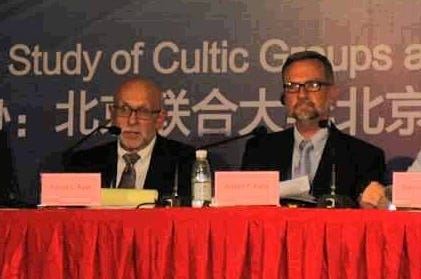
You’re absolutely right. I worked for the International Cultic Studies Association for 23 years, running conferences around the world. There’d be academics who were ‘cult apologists’, there’d be all kinds of people. When someone came up to registration, I couldn’t say ‘fuck you’. I had to be kind to everyone. And in doing that, I started developing human relationships with people I fundamentally disagreed with, but they were also human. We found that we’re not that far apart. Maybe we’re asking different questions. We’re concerned about people’s mental health and harms from group membership, while a sociologist of religion is looking at longer-term historical trends. They’re asking a different set of questions. It’s not that they don’t see the harm, but that’s not their research focus.
The topic of cults still seems very charged. I’ve had people say I shouldn’t do events with some people because they’re predatory cult figures. They shouldn’t be platformed.
Joe
Yeah, it’s interesting that you bring this up, because there had been a period of time where there had been a softening, but it’s almost like in the political climate today, with the polarization that exists, it has strengthened in this field as well. I feel like the understanding that we could gain from the other side is being lost again - ex-cult members are exhorting the International Cultic Studies Association and other organizations to not have these ‘cult apologists’ in their conferences at all.
Patrick
If your loved one is involved with a predator, you want to understand them. And if you don’t interact with them, or you don’t have interviews with them, you don’t know anything about them. So now you’re guessing. That’s not helpful to the member you’re concerned about, because if you’re guessing and you’re hitting it wrong, then the individual you’re trying to impress is not going to be impressed.
Do you ever actually mediate directly with groups?
Patrick
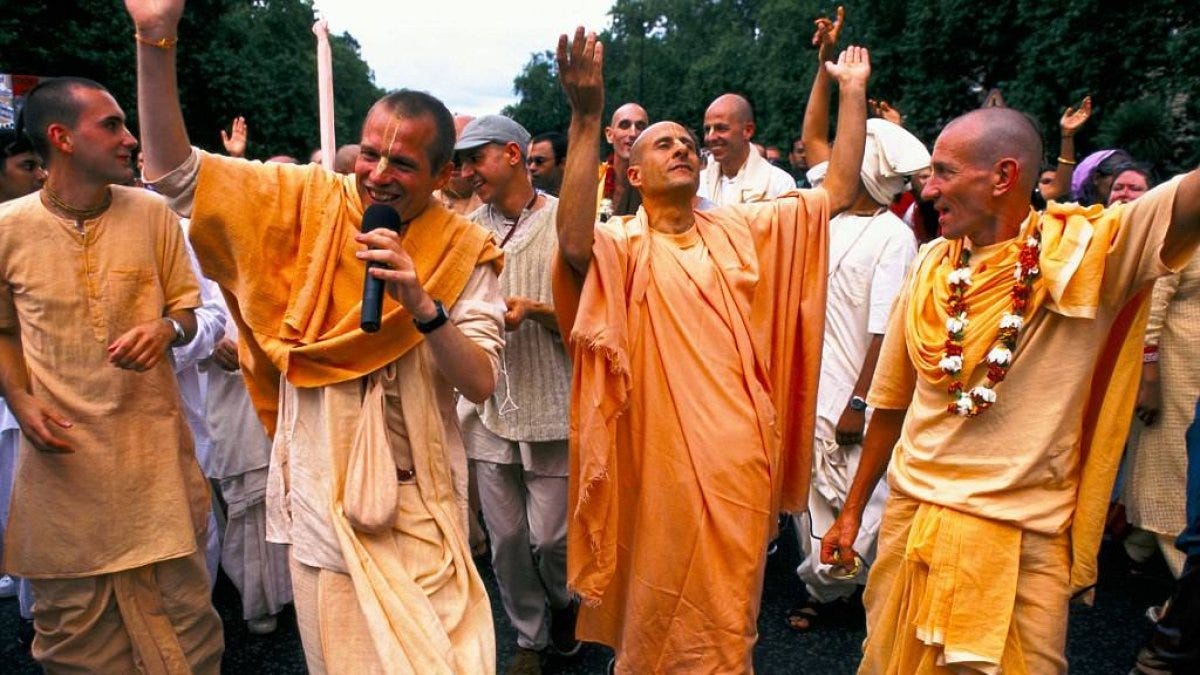
Yes. Eileen Barker would ask us to come and talk to her colleagues. And at these conferences, numerous groups come to the events, specifically the Hare Krishnas, and I’ve developed a good relationship with the head of their PR department. I’ve been to his home. And when there are families concerned about their loved one who have severe mental health issues, that’s not beneficial for the Hari Krishna. It’s not beneficial for the family. So we’ve found an intermediary that will work with us. Numerous times they’ve come to us and said, we have a problem with a particular temple, people are being abusive. They share information. Because in the past, if a case went to court, they were losing all their money from lawsuits, so the organization does not want the same problems they had in the past.
Over the 40 plus years you’ve been working, you’ll have seen historical changes in groups. Where are we at now? More online recruitment, more female leaders?
Joe
Definitely more female group leaders. If it was 10% in the past, it’s now 30%.
Patrick
In the past, a group had a pyramid structure with the leader at the top, and at every level of the pyramid, different levels of information were given out. So there’s this embedded cultic knowledge that unfolds as you rise up the pyramid, requiring increasing commitment - faith in the leadership takes you to the next step. But with the internet, you can go and find out everything right away. So it’s much more about creating a lot of media content now.
And I guess creating a sales funnel from that, to direct people from your online content to your more intense one-on-one or small group work. So what are gurus like? Have you noticed common characteristics?
Joe
Everyone bandies about the term ‘malignant narcissist’. I think ‘entrepreneurial’ as well. We’re seeing many more people self-proclaiming their status as being a visionary, enlightened, having a unique perspective on reality, at a time when the internet and podcasts and YouTube videos allow people to express their newfound wisdom. So there is a sense of entrepreneurial freedom. The world’s wide open. Some include substances. Others include ideologies. Some are life coaches. Some are outright gurus.
People pejoratively can say ‘grifter’, and that’s true, but it’s not all bad I guess, it’s also entrepreneurial. Spirituality these days is a kind of influencer hustle culture, isn’t it?
Patrick
You also have people who have had an internal experience, a vision, perhaps it’s self-delusional, and then it becomes like a follie a deux. I have the experience of seeing angels. And suddenly the people around me also start seeing angels, and it makes me more convinced.
People sometimes wonder, are gurus just liars, imposters, bullshitters, sideshow conjurers. To me it seems more blurred. I’m reading a biography of Joseph Smith. Sometimes it does seem like outright fraud, with his discovery of the golden plates etc. But sometimes he seems to have really believed he had divine powers, because look at all he created and all his followers and all the miracles that occurred.
Joe
If I believe strongly enough, I can convince others that this is real, then others are reflecting back to me that it’s real, and therefore it is. We create our own reality. And if this seems to be helping people understand how spirit works, who am I to question it? I’m the vehicle. It’s self-hypnosis. Hypnosis is congruence.
What do you mean?
Joe
The induction of hypnosis is the induction of conviction. The hypnotist is a coach - everything about them has to be congruent, their facial expressions, their body-language, their voice, there’s no hesitation. It’s all congruent. And that congruence affects the person listening or observing and feeds back into the conviction of the hypnotist. Expectancy can play a big part in this. What do you go into the environment expecting to happen? And are they able to deliver what you’re expecting?
TM teachers were trained in being congruent. `The teaching material is memorized verbatim, down to lilts at the end of sentences. I learned it 50 years ago, and I can still tell it to you. We became so congruent, we could be having cramps and we would just go into the voice.
It’s like a sales patter.
Joe
It’s scripts, yeah. Shamans are congruent. They have their patter, and they probably do a little testing. They go out to the edge and see what the result is. But they also have people who’ve maybe been in groups or been with other teachers, other shaman, and then those people tell the shaman, this is what happened with shaman X, and that person can start adjusting what they’re doing and seeing how it works.
On cults and gurus’ use of psychedelics
So this is partly why psychedelics can be so powerful in terms of building congruence and charisma and expectancy feedbacks between the client and the facilitator.
Joe
When you control the narrative of the psychedelic setting, you can control the way the person perceives. I’ve had experience with psychedelics, and had I taken them in a cultic context I’m sure it would have been immensely persuasive, because the experience was so overwhelming. It expanded beyond the container of my existing knowledge.
I guess the guide or shaman gives you a new map. You’re outside your existing map of reality, and they give you a new map, and maybe your experiences seem to confirm that map. Now their map is correct, their map is reality. And now you’re living in their model of the world.
Patrick
That’s what gurus do. Joe was in a group which followed Swami Prakashananda Saraswati, and he taught that God comes back in cycles, and every time they do, they have a different skin colour - blue, orange, gold and so on.
Joe
He was a scoundrel, and he also gave me experiences unlike anything that I had. And during a chanting session, I opened my eyes, and he was bathed in golden lights. These hallucinogenic effects can happen without drugs. So here’s the theory about the Avatar returning, and here’s the confirmatory experience. It has to be true.
The shaman or the group can convince you that you’re in a place that is transforming your consciousness in a way that was not possible on your own. That can lead to a dependency on the leadership, and there’s a danger in that, because the qualifications of the leadership (or lack of qualifications) have to be considered. How to evaluate that it’s safe along the way, and that someone isn’t just keeping you in the churn, so you’re coming back again and again and becoming dependent on them?
In today’s culture of alternative therapy, people who are struggling and on the edge get directed into working with a shaman or some other so-called psychedelic healer, who has no training in dealing with serious mental health problems. That may be dangerous for them to enter into that psychedelic relationship, and could lead them to desperately cling to the leader, because it’s the only solid thing they have.

Have you come across many cults that use psychedelics over the last 40 years?
Patrick
There was one in New York City - a music teacher, he had a system of music which was a different scale, and he had very talented young men that he taught from well-heeled families who would pay a fortune to have him teach their kids. And it turned out that he’s sexually abusing the boys. But besides that, he was giving them acid, locking them in closets with alligator clips on their nipples for 12 hours of time during music sessions to fulfill his own needs.
Joe
They were told not to tell their parents. We were brought into the case when one member of this small coterie of young men broke away and said, ‘this is bullshit’, and went and told the parents. Trying to break these young men out of that setting was hard, I think they had just turned 18, so it became very difficult legally to actually take them and put them in a retreat, or some kind of recovery center. So it became a real battle with these young men. But we were successful in guiding them out of the control of this reprehensible man, and they at some point made the choice not to legally challenge him. They just wanted to move on with their lives. They were kind of ashamed and embarrassed looking at what had transpired in those settings over the course of a year and a half, slowly bringing them in through, testing how much acid to give them, and then isolating them in a closet with his own faeces in their mouth. It was brutal.
What happened to the teacher?
Joe
I think he died. Another case was a woman called Karen Glueck, she claimed to be channeling a 16th-century cleric by the name of Father Andre. It was the time of the channelers - Ramtha, Mafu, Brother Matthew and so on. She incorporated psychedelics. There was a guy who left and separated from the group. And he talked about how the combination of drugs and the authority of Father Andre was breaking down any barriers or boundaries or moral and emotional guidelines and allowing Karen Gluck to completely control the group. She would sit up on a dais, give everyone LSD and MDMA and then say this man and this woman must now join in union. So you’d sit there on acid and listen to your husband or wife having raucous sexual intercourse in the room next door. People were also encouraged to breast-feed when they were on drugs.
Cults, predators and high-net-worth spirituality
Do such groups or individual figures often target wealthy people?
Joe
Yes. It’s the entrepreneurial aspect I mentioned early. Some guru-types want to find a whale [a high-net-worth individual] to give them financial freedom. And if they do, that whale will tell other whales, who will also invest in the guru’s alternative therapy. You see what can happen when you look at James Ray, the guy running sweat lodges in the desert where people died. He was heralded as being somebody capable of bringing about transformation amongst well heeled stars and Oprah etc. He turned out to be desperately unqualified for what he was going.
Patrick
We had one client from a family that built the railroads in the US. They had outrageous sums of money. There were four siblings in the family, two of them were in cults and one of them was a drug addict. They had 10 or 12 grandchildren, who inherited billions. Eight or nine of them were in cults.
There was another case - this is going to sound bizarre - but there was a family with generational wealth, tied up in trusts. A young woman was going to inherit half a billion dollars from their great-grandfather’s trust. And this group of gypsy psychic types target wealthy people, long-term targeting over many years. They get jobs as housekeepers, janitors, and so on. Very wealthy people often have horses, so this gang of ‘psychic’ gypsies placed a young woman in one of the horse ranches, to work there, and she befriended the wealthy heir and brought her to the gang. And they kept her stoned, all the time. This is where it gets weird. The heir was having problems developing any kind of relationship. The gypsy psychics convinced her that they had found her soul mate, but he was trapped by the CIA. And he needed $12,500 a month to be free and united with her. They showed her letters from the soul mate. And she believed it.
Joe
Her mother tried to limit her access to funds while the mother was still alive, but she was in her mid 70s, and wasn’t going to be here forever. The father was also a magical thinker and involved himself in many conspiracy theories. He convinced his daughter that the mother was trying to control her through wealth, through means. It shows that these cult stories also involve complicated family dynamics. And when you’re advising one of these very wealthy families, it’s very complicated. They often have an entire team - security, family psychologists, lawyers, money managers, private detectives and so on.
Patrick
Another cult that used psychedelics was Zen Master Rama’s group. He was big in the 90s. A literature professor. He had a place on Long Island where he gave people acid without them knowing it, and they would see him do things like levitate. The family that hired us, they own one of the largest cookie companies in Europe. And this kid was going to get one half of the cookie fortune. We did the intervention in this house that used to belong to Catherine of Aragon.
And did it work?
Patrick
Yeah, it did. But it wasn’t immediate, it took many years.
Why do wealthy people get attracted to these sorts of groups and individuals? It surprises me that they pay for the best education or healthcare or restaurants, but when it comes to spirituality and healing, they often do zero due diligence.
Patrick
It’s Maslow’s hierarchy of needs. They have their material needs satisfied and they’re still not happy. They don’t want to go to the local mega-church, that’s too plebeian. So they get drawn to individuals or groups offering something special or secret. My father was in the military, and when people asked him what I did for a living, he said ‘My son deals with high-class problems.’

One-on-one cults
Ok that’s all I can give away for free. After the paywall, Patrick and Joe discuss one-on-one cults, ie healing or therapeutic relationships that become over-dependent and controlling. We also discuss IFS and how it reminds Patrick of Scientology, as well as what families should do if they’re worried a loved-one has joined a cult. And I’m early-sharing the recording of this week’s event on Mormonism and psychedelics after the paywall too, as a thank-you to my paid subscribers.
