Ecstatic Integration

Ecstatic Integration

Can Costa Rica’s psychedelic Wild West be made safe and legal?

Lawyers say it's up to the CR government

Jules Evans's avatar
Jules Evans
Dec 12, 2025
∙ Paid
  • Para leer en español ve aquí

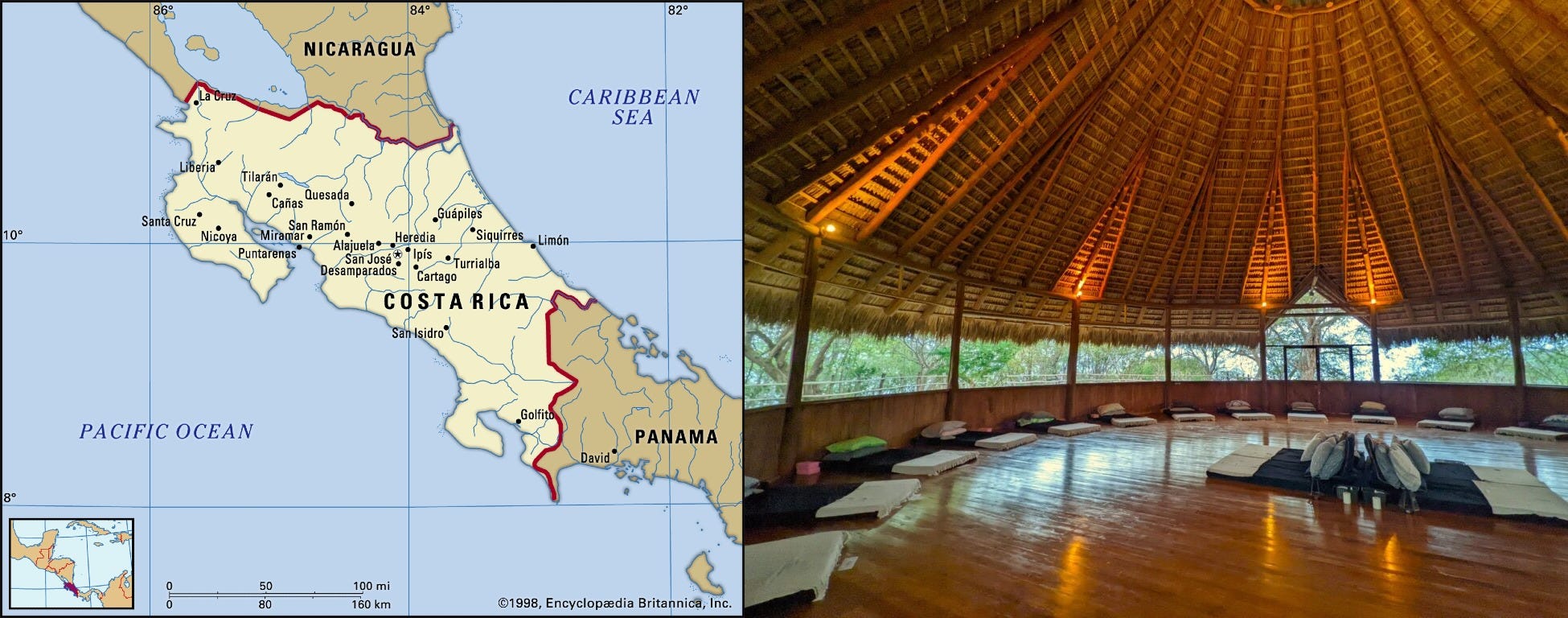
When I tell people I live in Costa Rica, they often tell me either that they went on holiday there once, or it’s on their bucket list. It’s a famous, if expensive, destination for tourism, for four main reasons: its beaches, its wildlife, its adventure tourism, and its plant medicine retreats. Costa Rica has around 80 centres offering ayahuasca, psilocybin, 5meoDMT or iboga, as well as guides offering smaller ceremonies, and this small but profitable niche of the tourism industry has attracted everyone from Meghan Fox to Aaron Rodgers to (allegedly) Ivanka Trump.

Yet even though tourists are spending thousands of dollars for plant medicine experiences, they are not always getting a platinum experience. Of the 80 or so centres, as far as I’m aware, only three actually have licenses to operate - all the others are operating illegally. Because they’re operating in the grey or black economy, centres seek to cover up harms rather than risk legal problems, even if that puts clients at risk.

A recent podcast from NPR’s Radio Ambulante tells the sad story of Lauren Levis, who died in August 2024 under the influence of iboga at the SoulCentro retreat. She paid around $7000 for three iboga treatments to try and overcome drug addiction. She had a bad physical reaction in her first treatment and vomited around 80 times. She couldn’t complete the treatments so went home to the US and asked for a refund. The American owners of the centre, Elizabeth Bast and Chor Boogie, refused and instead suggested she come back for another treatment. She did, against the advice of her family, and once again had a very bad physical reaction, vomiting repeatedly. She begged for an IV drip to rehydrate herself, but the medical assistant failed to find a vein. SoulCentro staff didn’t call an ambulance, instead putting Lauren in a shower, where she had a heart attack. Elizabeth Bast then emailed Lauren’s partner, Juno Sisneros, to tell her to contact them immediately. Juno frantically called and emailed for the next 24 hours with no reply. Finally Bast replied to say she was busy and Juno should contact SoulCentro’s lawyer. Juno called the local police, and overheard that her partner had died. SoulCentro’s lawyer then lied to Lauren’s family that Lauren hadn’t taken iboga. Elizabeth Bast told La Nacion this week: ‘It was very sad and unfortunate that Lauren passed away so suddenly, and as the medical examiner concluded, it was due to natural causes. We are grateful that we were able to provide some positive impact on Lauren during her life.’

Lauren might not have died if the retreat was run more professionally. And the family’s suffering was made worse by the centre’s attempts to protect themselves from legal consequences. SoulCentro is still operating. And that’s ultimately on the Costa Rican government, for failing to provide a safe tourism market for the people who spend tens of thousands to come here. Gonzalo Gutierrez, a Costa Rican lawyer who is working on two psychedelic-related cases at the moment, says the government could be liable for any serious harms that tourists experience at psychedelic centres.

40-year-old Lauren Levis, who died this year at an iboga centre in Costa Rica

There have been at least two psychedelic-related deaths in the last 18 months in Costa Rica - Lauren Levis, and a 23-year-old Polish woman who fell down a ravine in December 2024, while attending an iboga retreat run by Awaken Your Soul in Perez Zeledon. In addition, the American owner of a retreat centre has been accused of rape in a pending court-case (they deny it). Another American who owns a retreat centre runs it as his personal sex-camp, according to people I’ve interviewed who worked there. There is a known rapist serving medicine in Santa Teresa, who assaults female clients while they’re on DMT. There are foreigners serving ayahuasca and DMT in Santa Teresa who have never done these substances themselves.

A typical figure in this unregulated market is Yashpal Jayne, a long-bearded American hippy, who lost his naturopathic doctor license in Oregon in 2013 when a client died on ibogaine while under his care. He came to Costa Rica, and started up a psychedelic church during the pandemic, serving 5meoDMT and ibogaine to tourists despite the protests of other foreigners in the area. He said on a recent podcast that another client ‘recently died’ on ibogaine. Jayne also says he was in a court hearing in October, accused of sexually assaulting women while they’re under the influence, which he denies. Jayne did not respond to an email we sent him.

Yashpal Jayne, who also calls himself Dr Iboga

Most of the psychedelic centres operating in Costa Rica are owned by gringos, staffed by gringos, the clients are gringos - there is little connection to the local economy or culture. When one of the most profitable centres was asked if they could contribute to a local charity, they said they could donate used bed-sheets. The centres import shamans from Colombia and Peru and call it indigenous healing. In at least two cases I know of, these imported shamans have sexually assaulted the clients paying thousands for their Costa Rican psychedelic holiday.

In other words, tourists are paying first-world prices and getting a Wild West experience. But Costa Rica is not the Wild West, it’s a country that prides itself on being a peaceful, prosperous and law-abiding democracy. The plant medicine retreat industry should be run with higher standards of safety and accountability, in line with Costa Rica’s reputation as a luxury tourism destination.

Imagine the Costa Rican plant medicine industry in 2030. The government has collaborated with the best retreat centres to clarify rules and ensure standards of care for every plant medicine tourist. There is proper marketing, screening, preparation, dosing, support, and integration. Tourists can trust they will not be sexually assaulted, and if they are, there are severe legal consequences for the assaulter. Retreat centres pay taxes in Costa Rica, employ locals, and bring millions of dollars into the Costa Rican economy. The centres are connected to scientific researchers working in leading Costa Rican universities. There are affordable options for Costa Ricans seeking healing, and a better public understanding of plant medicine. Plant medicine retreats are the jewel in the crown of Costa Rica’s wellness tourism industry. Accidents and harm still occur, but when they do, there’s learning and accountability.

That’s a feasible five-year goal. And there are Costa Ricans and foreigners who are trying to turn the Wild West into a safer, legal, accountable industry.

Gonzalo Gutierrez is a partner at AG Legal, a Costa Rican law-firm. Over the past three years, he has advised and represented clients in several matters involving alleged harm at psychedelic retreat centres, including an accidental death, and accusations of rape. Both cases are currently under judicial investigation. Gutierrez tells me that tourists who feel harmed at a Costa Rican psychedelic retreat have three options:

Keep reading with a 7-day free trial

Subscribe to Ecstatic Integration to keep reading this post and get 7 days of free access to the full post archives.

Already a paid subscriber? Sign in
© 2025 The Challenging Psychedelic Experiences Project · Privacy ∙ Terms ∙ Collection notice
Start your SubstackGet the app
Substack is the home for great culture